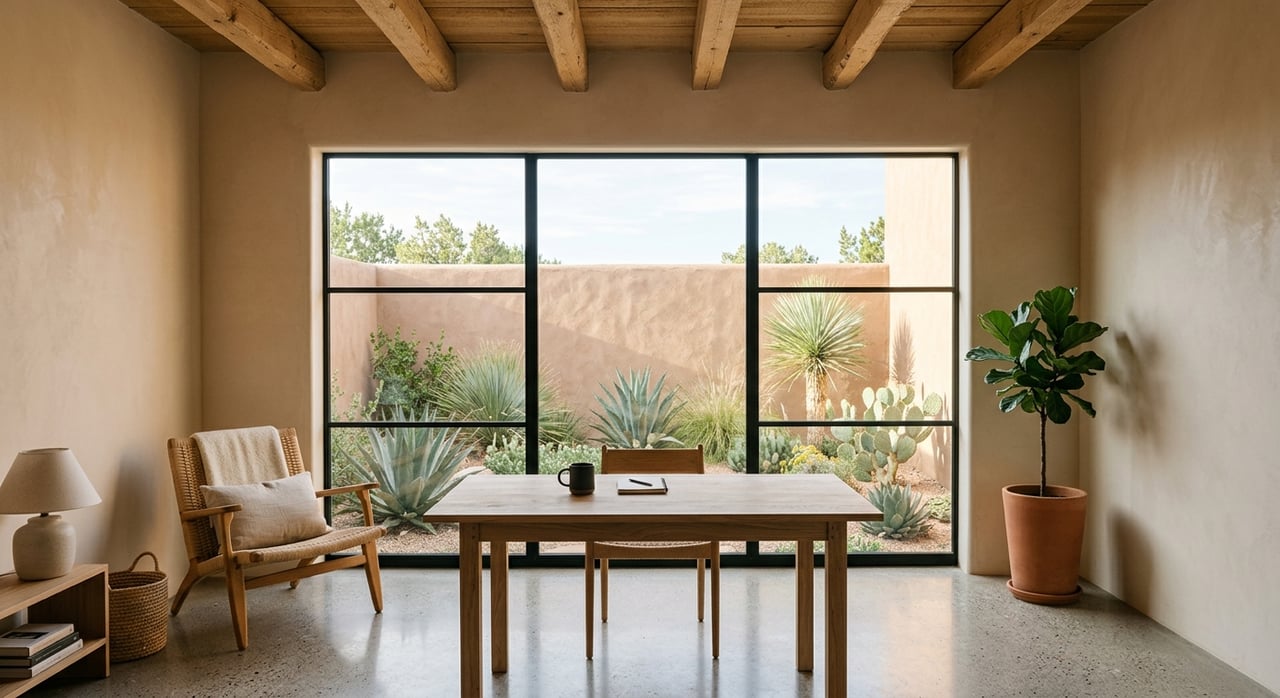
If you are dreaming about a place to paint, write, compose, or simply think more clearly, Galisteo and Lamy offer two compelling ways to do it. Both settings feel deeply connected to the land, yet each supports creativity in a different rhythm. If you are considering a home, second home, or land in this part of Santa Fe County, understanding that difference can help you design a retreat that feels both inspiring and practical. Let’s dive in.
Why Galisteo and Lamy feel creative
Galisteo has a long-standing identity as a small historic village shaped by artists, artisans, writers, musicians, and home-based work. Santa Fe County’s community plan also describes a village-scale setting with roughly 267 residents across 2,470 acres, surrounded by rolling rangeland and mountain views in every direction. That mix of history, scenery, and everyday creative life gives Galisteo a natural retreat quality.
Lamy offers a quieter but equally distinctive backdrop. Its identity is closely tied to the historic railroad, with the Lamy Train Station dating to 1909, and county planning documents describe it as a historic railroad-based community and regional commercial hub. At the same time, protected open space, scenic views, and the Rail Trail connection between Santa Fe and Lamy give it a more landscape-first feel.
In simple terms, Galisteo often appeals to buyers who want a village atmosphere with a visible creative culture. Lamy tends to suit buyers who are drawn to scenery, restraint, and a more secluded retreat experience. Both can work beautifully, but the design approach should follow the setting.
Start with the land
In Galisteo and Lamy, the landscape is not just something you look at. It shapes how a retreat should be planned, built, and experienced. County planning documents put strong emphasis on scenic protection, open views, and careful stewardship of the land.
For you as a buyer or owner, that means the best retreat design often starts with what not to do. Instead of imposing a dramatic structure that dominates the site, the more successful approach is usually to work with existing sightlines, preserve open space, and keep the visual experience calm and uncluttered. That is not a formal rule in every case, but it is a smart reading of how these places are valued.
Light matters, too. The Galisteo Community Plan identifies light pollution as a quality-of-life concern, which is especially important if your ideal retreat includes dark skies, quiet evenings, and a stronger sense of privacy. Exterior lighting should be considered carefully from the beginning, especially if your goal is to create a peaceful setting rather than a highly illuminated compound.
Galisteo design cues to follow
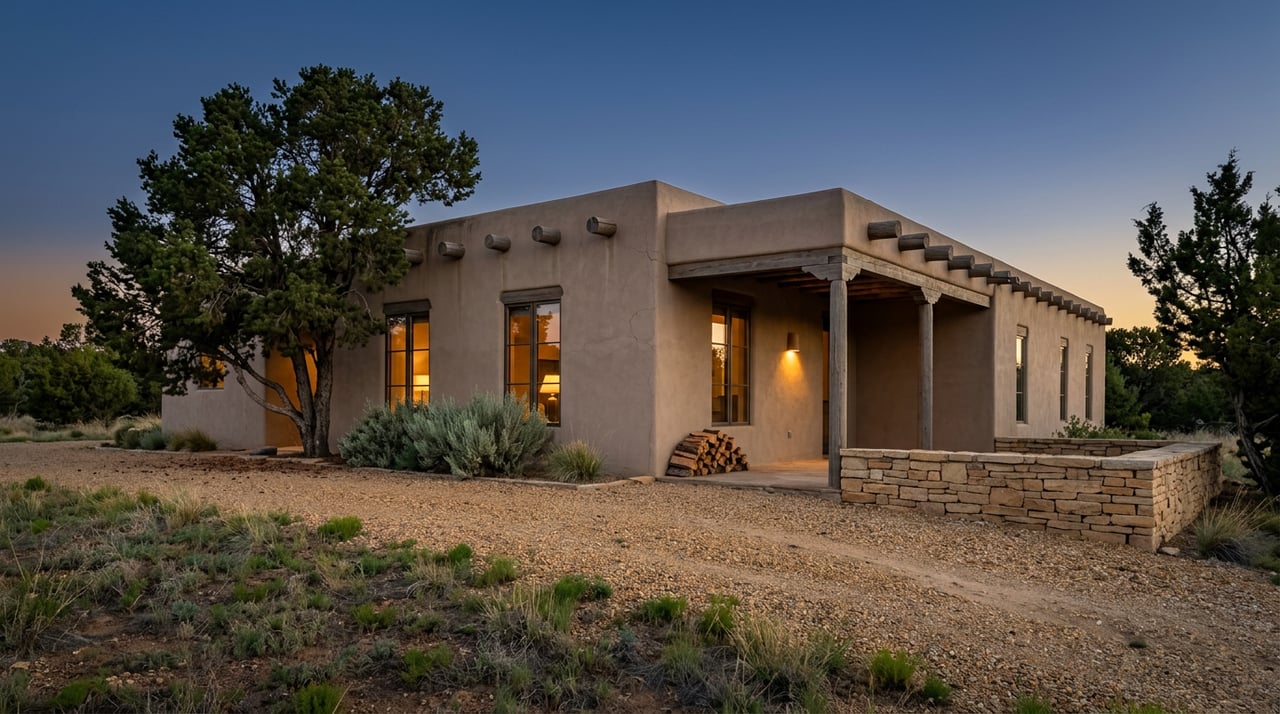
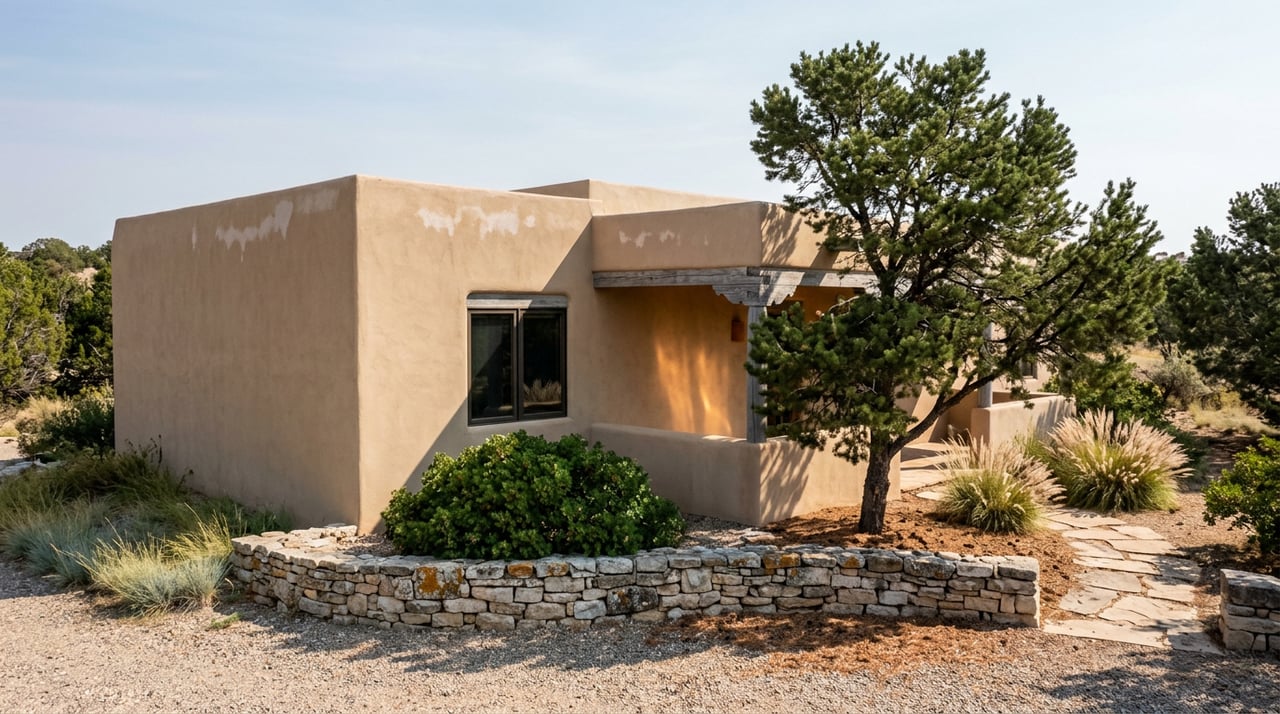
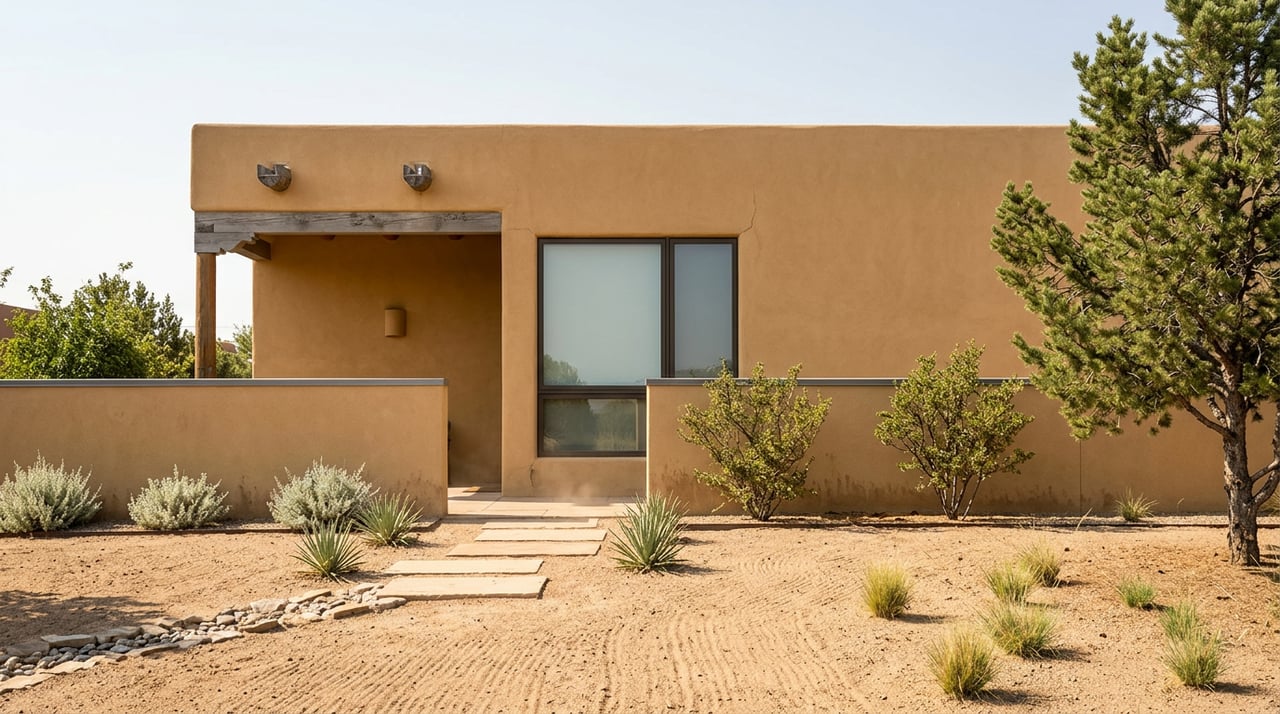
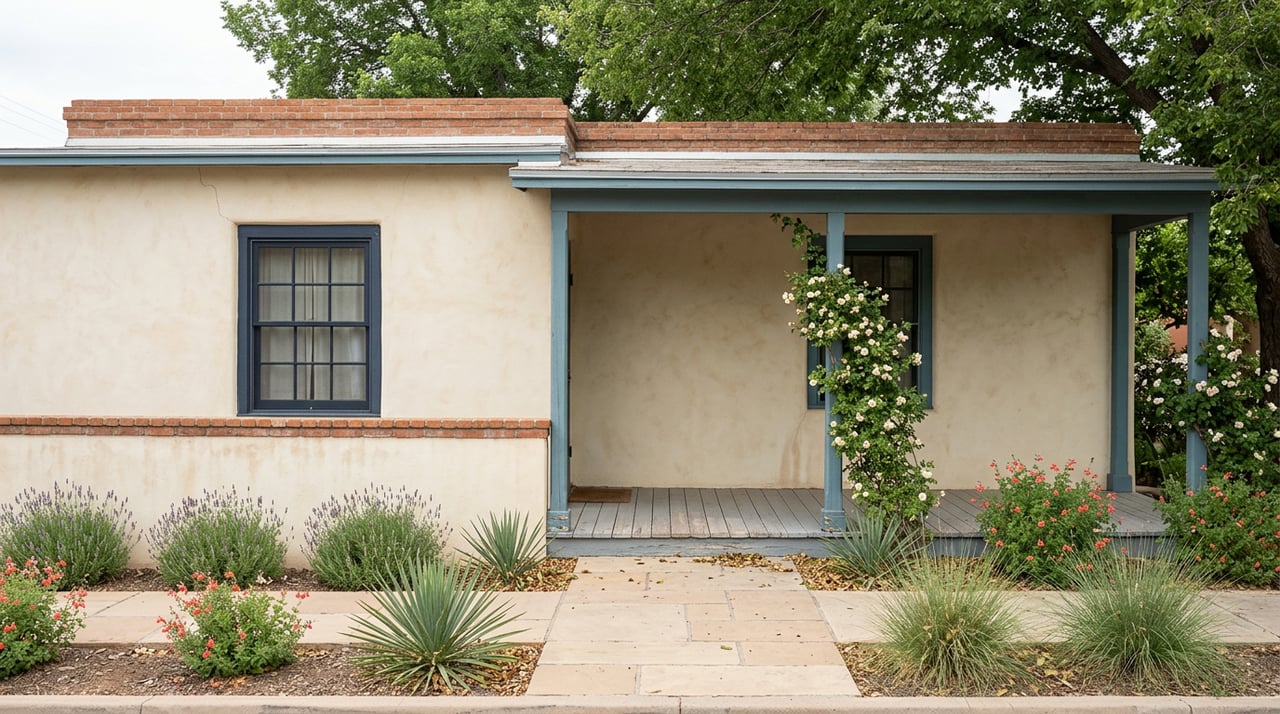
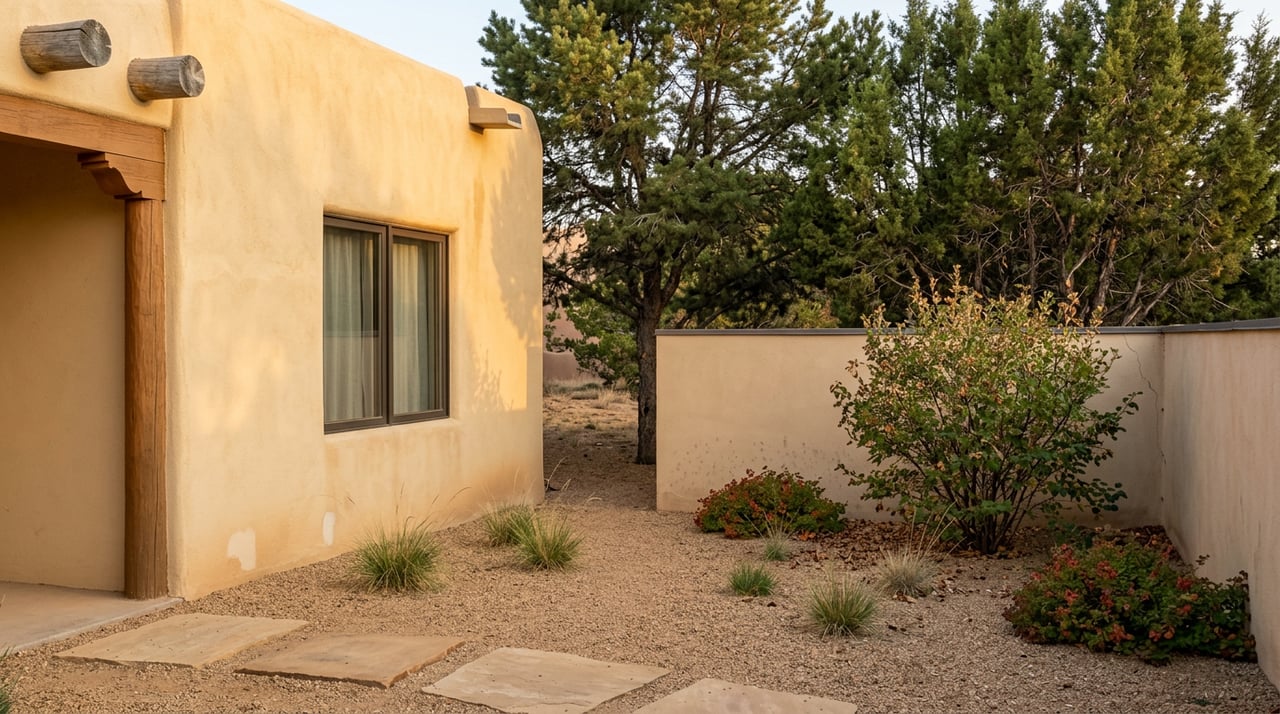
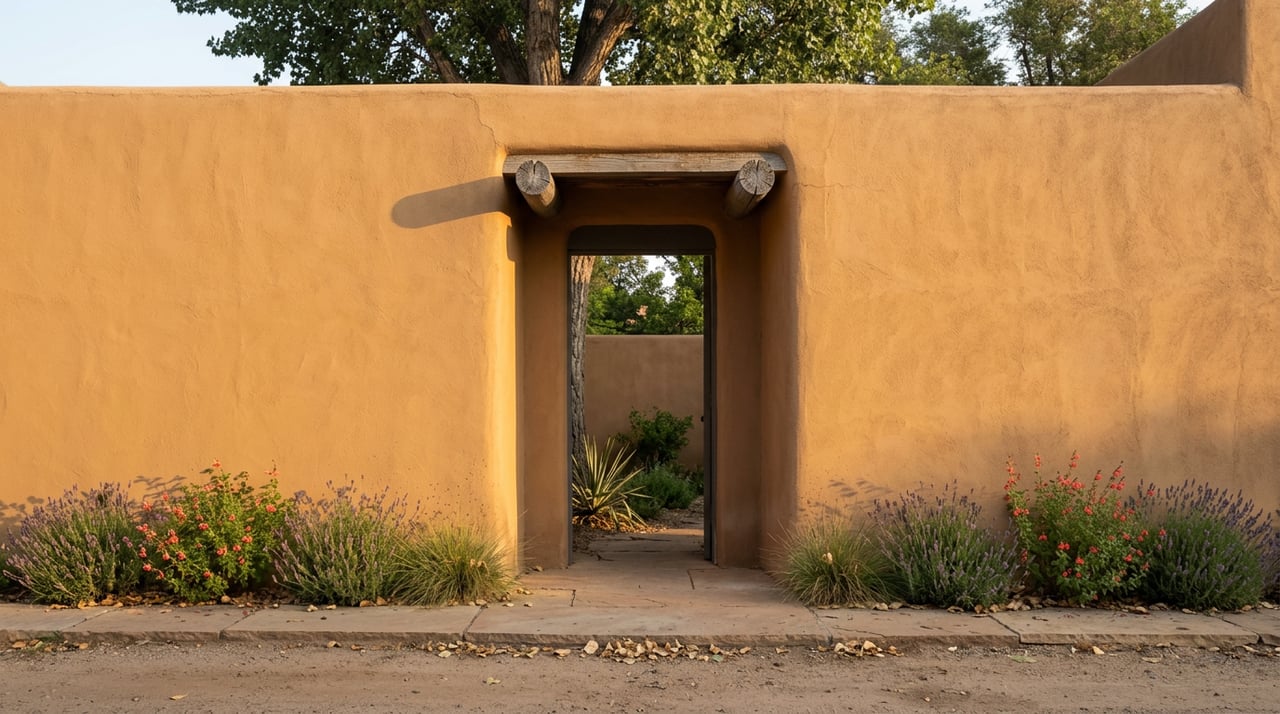
Galisteo offers a clear architectural language that can guide a creative retreat without feeling forced. The county plan highlights small lots, clustered adobe homes, accessory structures, unpaved rural roads, adobe and rock walls, wood gates, and coyote fencing as part of the village’s character. Historic adobes, gardens, orchards, sheds, and outbuildings all help define the local pattern.
That makes Galisteo especially well suited to a retreat made up of connected but modest elements. A main house paired with a quiet studio, writing room, or detached workspace will often feel more natural here than one oversized structure trying to do everything. The goal is not to copy the past exactly, but to respect the low-profile, material-rich feel that already exists.
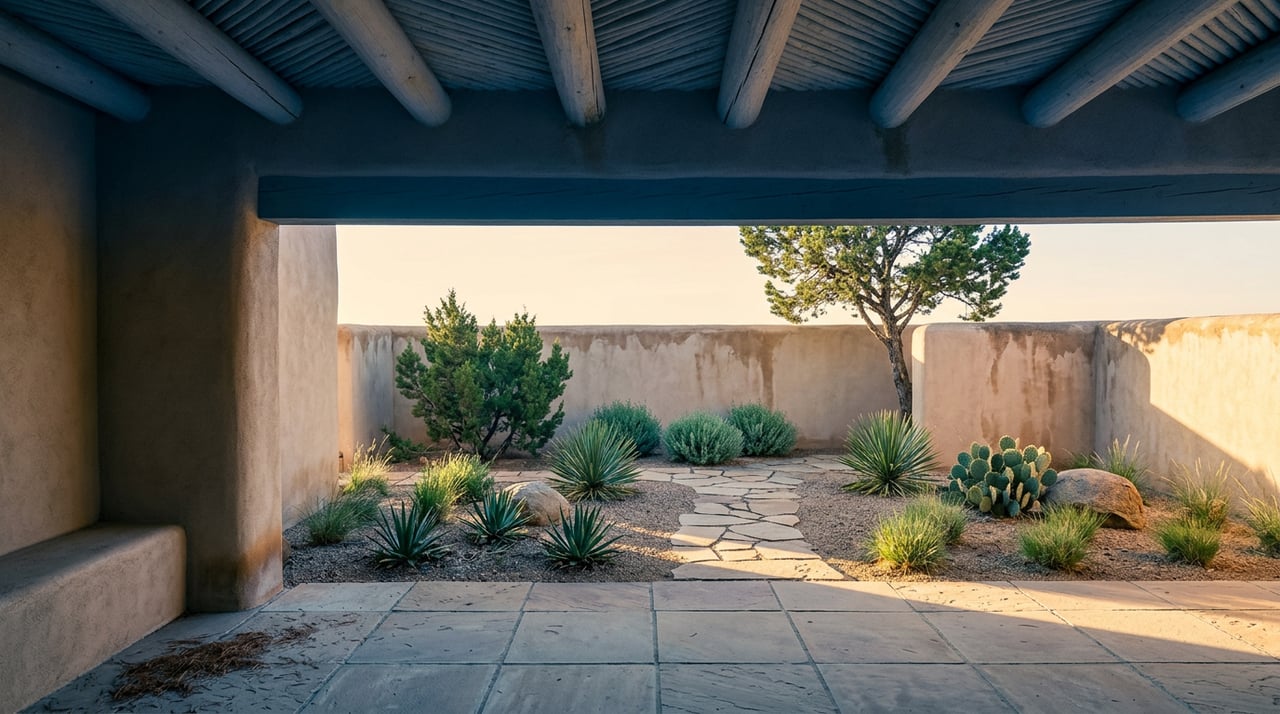
Privacy in Galisteo is also part of the appeal. The community plan notes local efforts to preserve open space, privacy, and local control, and much of the village charm comes from the way homes and walls shape outdoor space. For a retreat, that can translate into enclosed courtyards, sheltered garden rooms, and workspaces that feel protected without cutting you off from the wider landscape.
Best retreat ideas for Galisteo
- A detached art or writing studio that reads as a secondary structure
- Outdoor rooms framed by walls, gates, or native plantings
- A courtyard layout that balances privacy with natural light
- Material choices that feel quiet and grounded within the village setting
- Low-profile design that keeps views and the sense of openness intact
Lamy design cues to follow
Lamy points in a different direction. Here, county open-space planning emphasizes cultural-resource protection, natural design principles, natural materials, and preservation of sweeping scenic views. The feeling is less about village texture and more about a quiet relationship with the land.
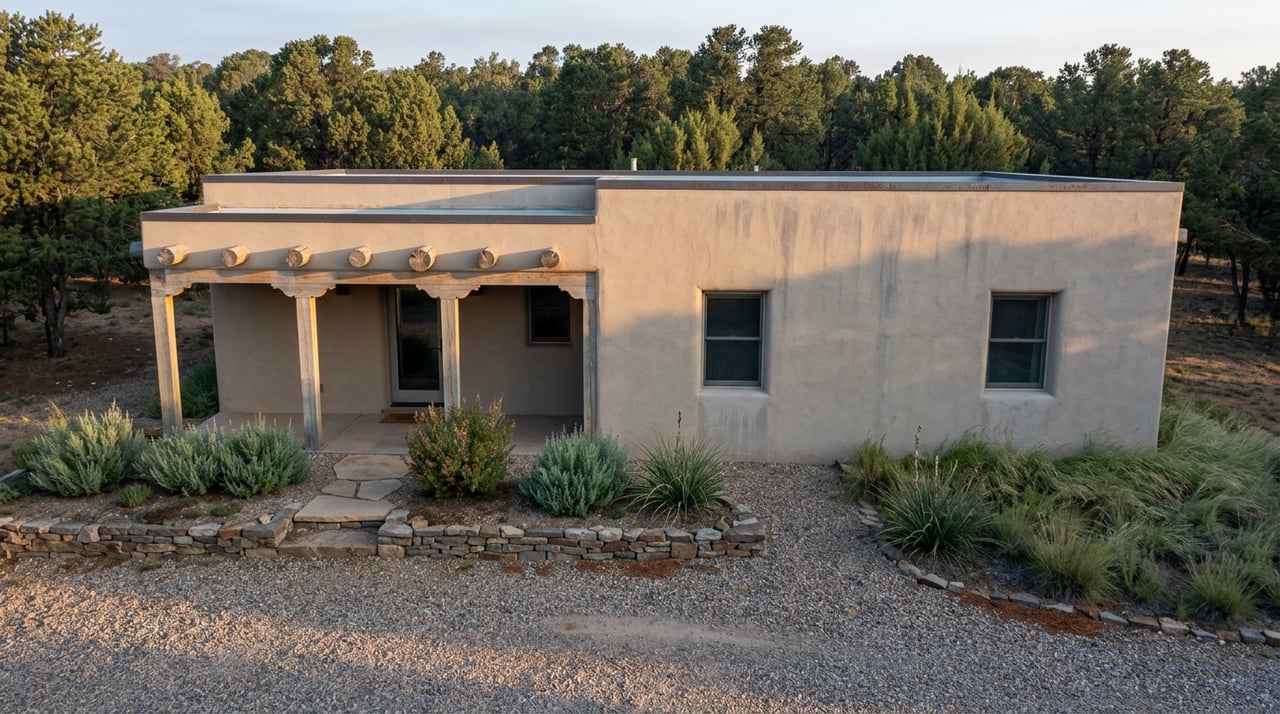
If you are designing a creative retreat in Lamy, restraint is often the strongest move. Rather than layering multiple built elements, a simpler composition may feel more appropriate. A carefully sited home with one modest work space, generous windows, and strong indoor-outdoor connection can fit the setting better than an elaborate collection of structures.
Lamy also benefits from its connection to the Rail Trail and its scenic, hilly terrain. If your version of a retreat includes walking, reflection, and time outdoors as part of your creative routine, that landscape can become part of the home’s daily use. In this setting, the retreat is often as much about what surrounds the house as the house itself.
Best retreat ideas for Lamy
- A simple, low-impact home design with natural materials
- A writing or work room oriented to long views
- Outdoor seating areas that prioritize quiet and landscape immersion
- Minimal site disturbance to preserve the natural appearance
- Design choices that support passive enjoyment of the surrounding land
Think about studios and outbuildings early
One of the most common questions buyers ask is whether they can build a detached studio. In Santa Fe County, the answer depends on how that structure is classified and whether the property can support it. You will want to distinguish early between an accessory structure, an accessory dwelling unit, and a home occupation.
According to Santa Fe County, accessory structures generally must share a driveway and utilities with the principal use. If they are residential in nature, they cannot be designed as a dwelling or include a full bathroom. ADUs must remain incidental and subordinate to the main home, use the same architectural style, be one story, and stay under 1,400 square feet.
If you plan to create art, write, consult, or run another low-impact creative business from home, county rules also allow home occupations when performance standards are met. The county notes that home occupations generally may not change the outside appearance of the premises. That is particularly relevant in Galisteo, where the local plan documents a long history of home-based work.
Practical factors buyers should weigh
A beautiful retreat concept still has to work on the ground. In Galisteo and Lamy, a few practical details matter more than buyers sometimes expect.
Water and infrastructure
Galisteo’s community plan notes that the area relies on groundwater and has limited water resources. It also identifies limited high-speed internet infrastructure as part of the local context. If your retreat depends on a studio, remote work, or frequent digital communication, these questions should be part of your early due diligence.
Lot status and development limits
In Galisteo, the traditional community district was created to preserve historic development patterns, including a minimum three-quarter-acre lot size that meets septic requirements. New development also must be compatible with scenic and environmentally sensitive areas. These factors can influence whether a site can realistically support your design goals.
Site work and permits
County code requires permits and review for certain site changes, including grading, clearing, some fences, and water-supply wells. That means even a modest retreat plan should be evaluated as a full site strategy, not just a floor plan. It is much easier to make a smart decision before you buy than to redesign the concept later.
How to choose between Galisteo and Lamy
If you are comparing the two, it helps to think about your creative life in everyday terms. Do you want to feel part of a village with a visible arts identity, historic texture, and a pattern of homes, walls, and outbuildings that support studio living? Or do you want a quieter setting where the landscape, views, and restraint shape the entire experience?
Galisteo may be the stronger fit if you are drawn to adobe character, village-scale setting, and the idea of a home with a separate creative space. Lamy may be the better match if you want a retreat rooted in open space, simple site design, and a stronger sense of visual quiet. Neither is better in general. The right choice depends on how you want to live and work there.
A thoughtful retreat starts with the right property
In places like Galisteo and Lamy, the most successful creative retreats rarely come from forcing a generic idea onto the land. They come from choosing a property that already supports your priorities, whether that means privacy, views, village character, room for a studio, or a setting that encourages calm focus. When you begin with the site, the design decisions become clearer.
If you are considering a retreat property in Galisteo, Lamy, or elsewhere in Santa Fe County, working with a local team who understands architecture, land constraints, and neighborhood context can make the search far more meaningful. To explore distinctive properties with a thoughtful, design-forward perspective, connect with The Agency Santa Fe.
FAQs
What makes Galisteo a good setting for a creative retreat?
- Galisteo combines a historic village setting, strong creative identity, mountain views, and a local pattern of home occupations, studios, and clustered adobe-style structures.
What makes Lamy different from Galisteo for retreat design?
- Lamy is more closely defined by railroad history, open space, scenic views, and a quieter, landscape-first character that often suits low-impact retreat design.
Can you build a detached studio in Galisteo or Lamy?
- A detached studio may be possible, but you should confirm early whether it would be treated as an accessory structure, an ADU, or part of a home occupation, along with driveway, utility, septic, and lot requirements.
Can you run a creative business from home in Santa Fe County?
- Santa Fe County allows home occupations when performance standards are met, and county materials note that home occupations generally may not change the outside appearance of the property.
What should buyers check before choosing retreat property in Galisteo?
- Key due diligence items include water availability, internet access, septic capacity, lot status, scenic compatibility, and any permit requirements for grading, fencing, wells, or additional structures.
How do you choose between Galisteo and Lamy for a second home retreat?
- Galisteo may suit you if you want village character and a studio-oriented setting, while Lamy may suit you if you prefer open space, visual quiet, and a more restrained relationship to the land.