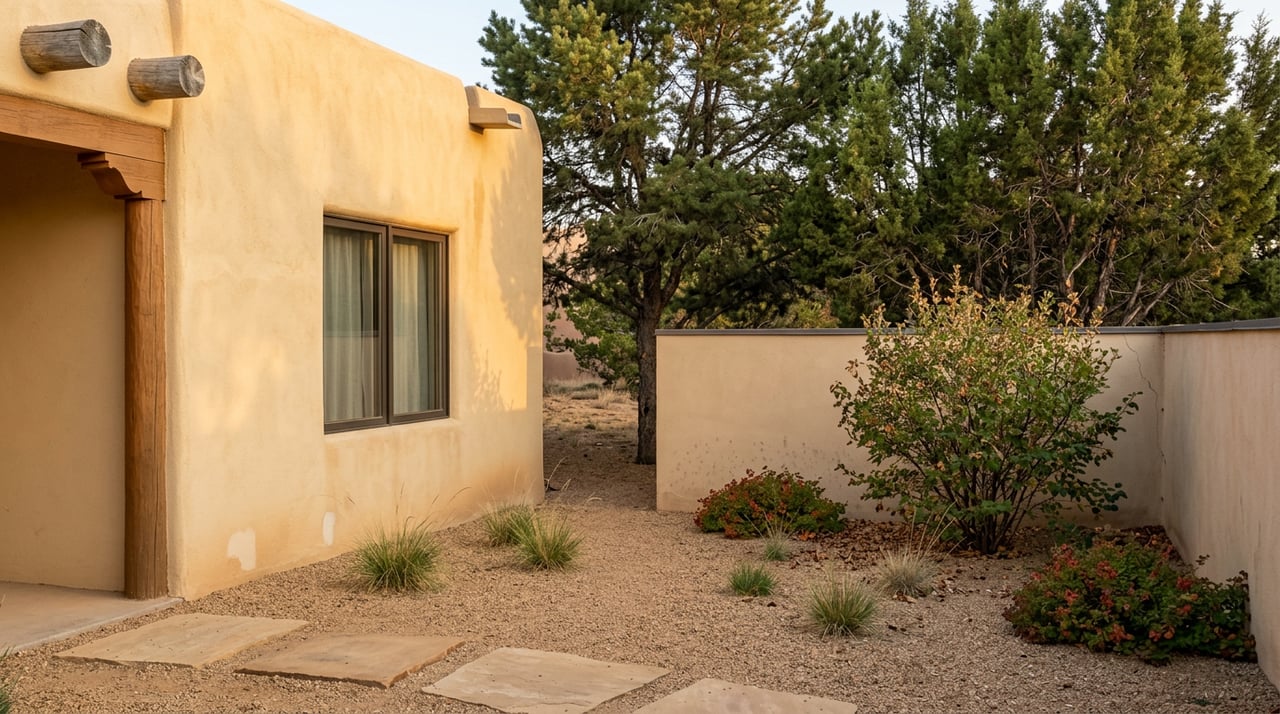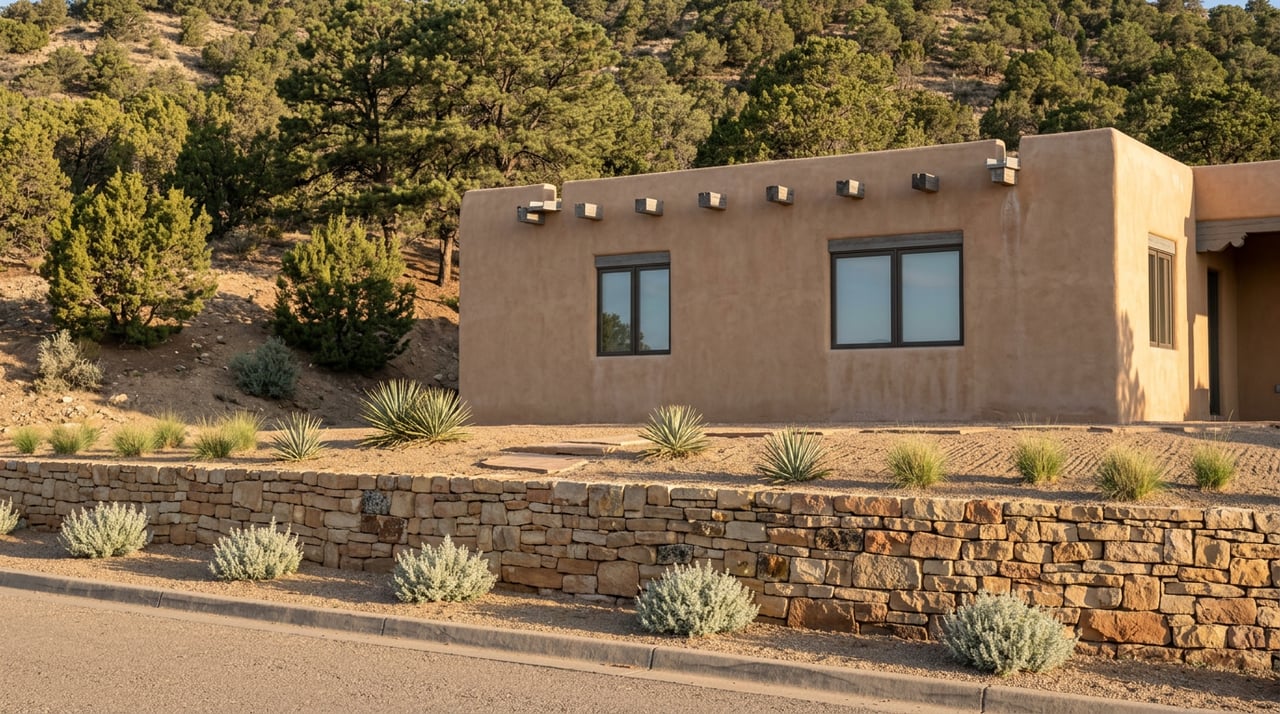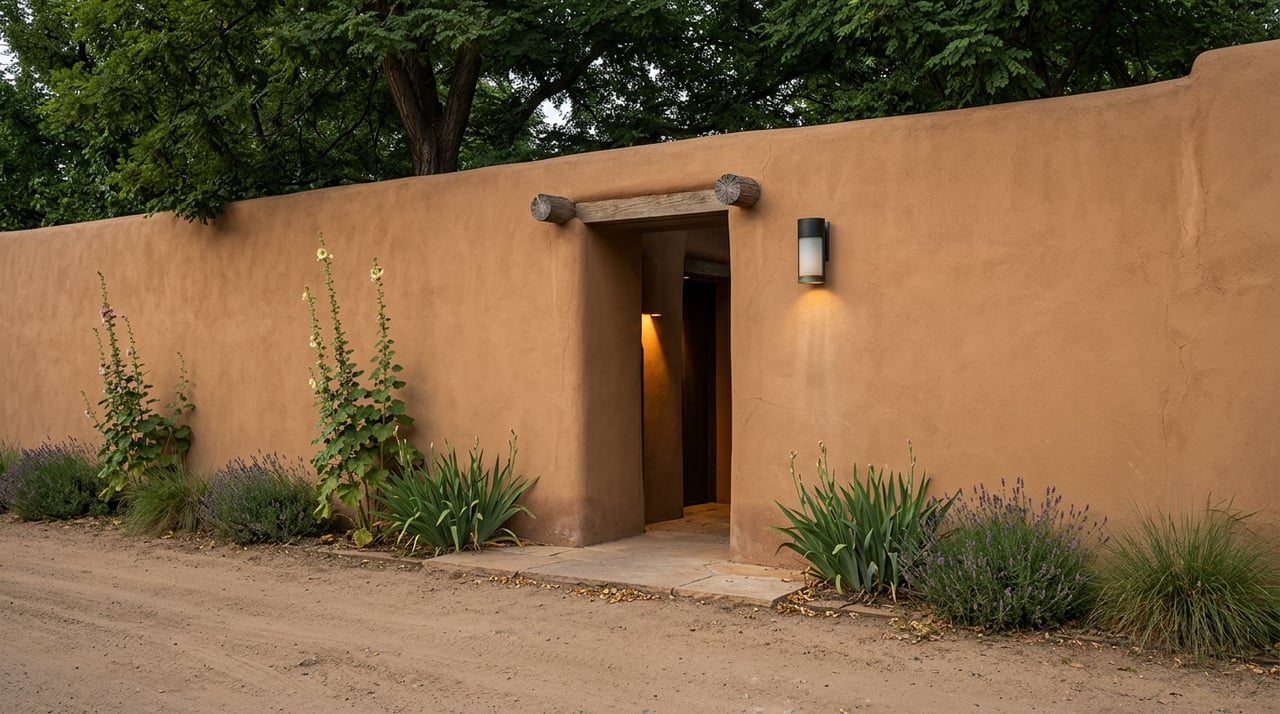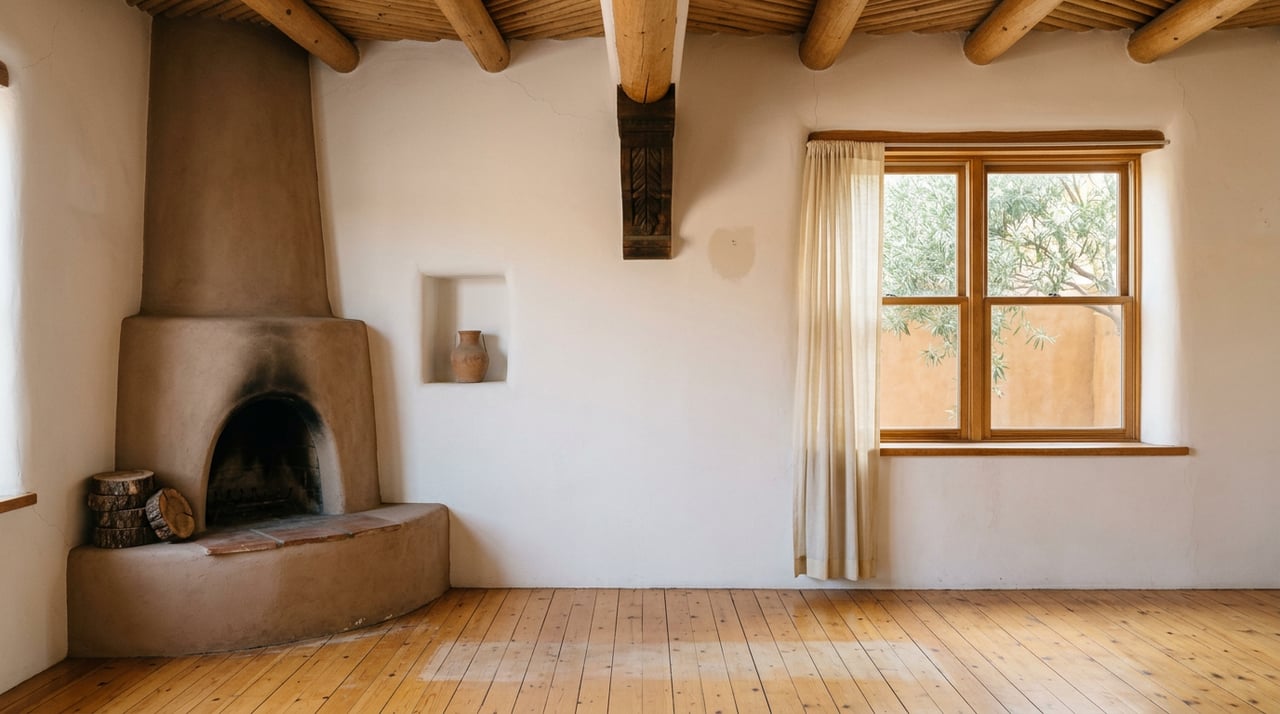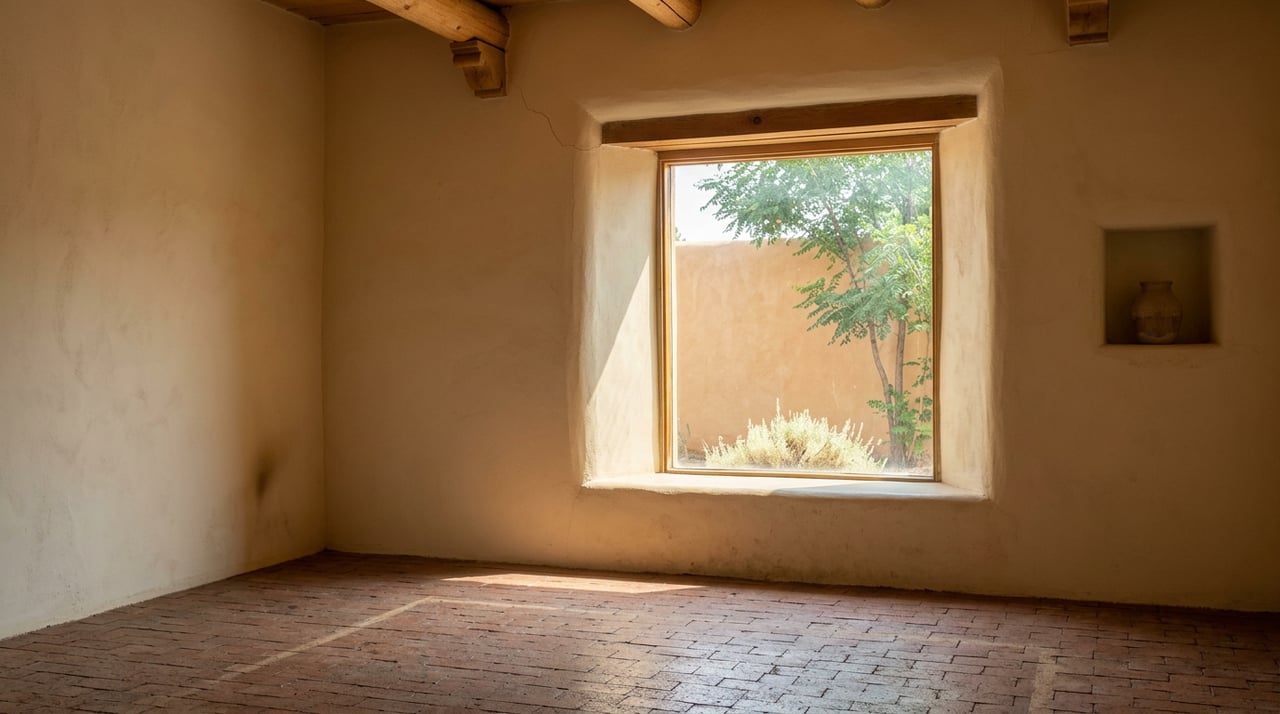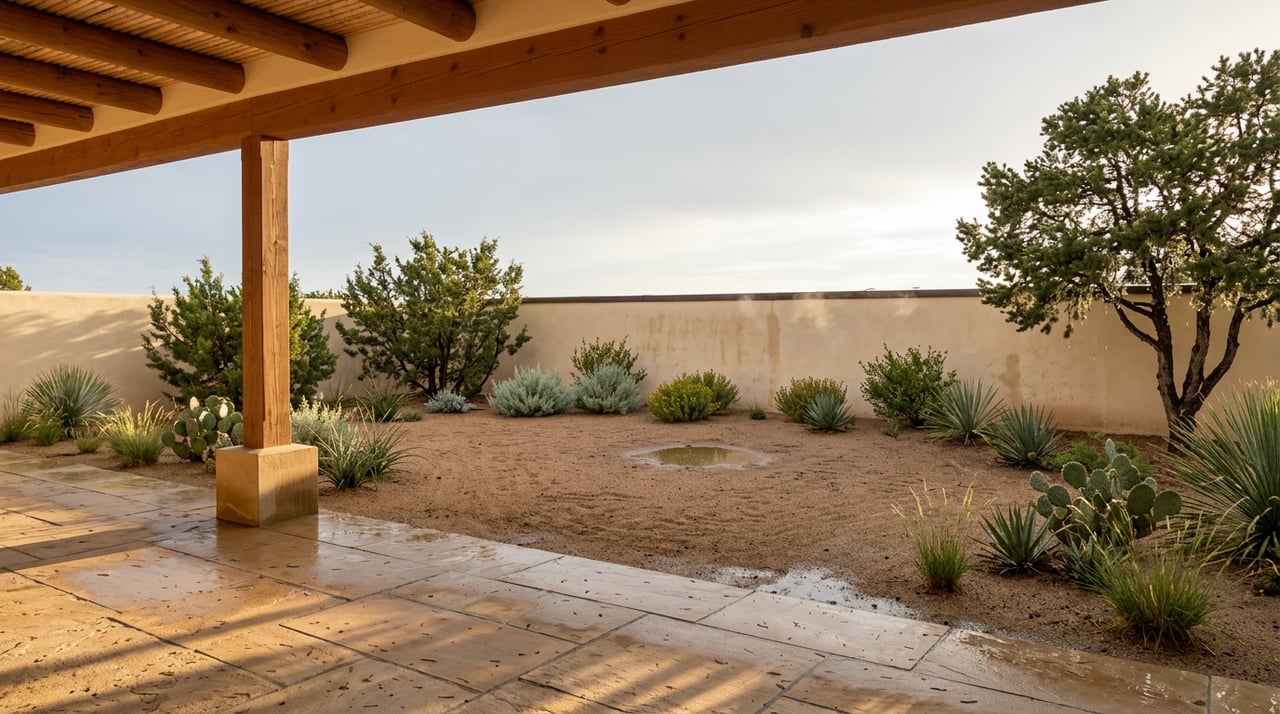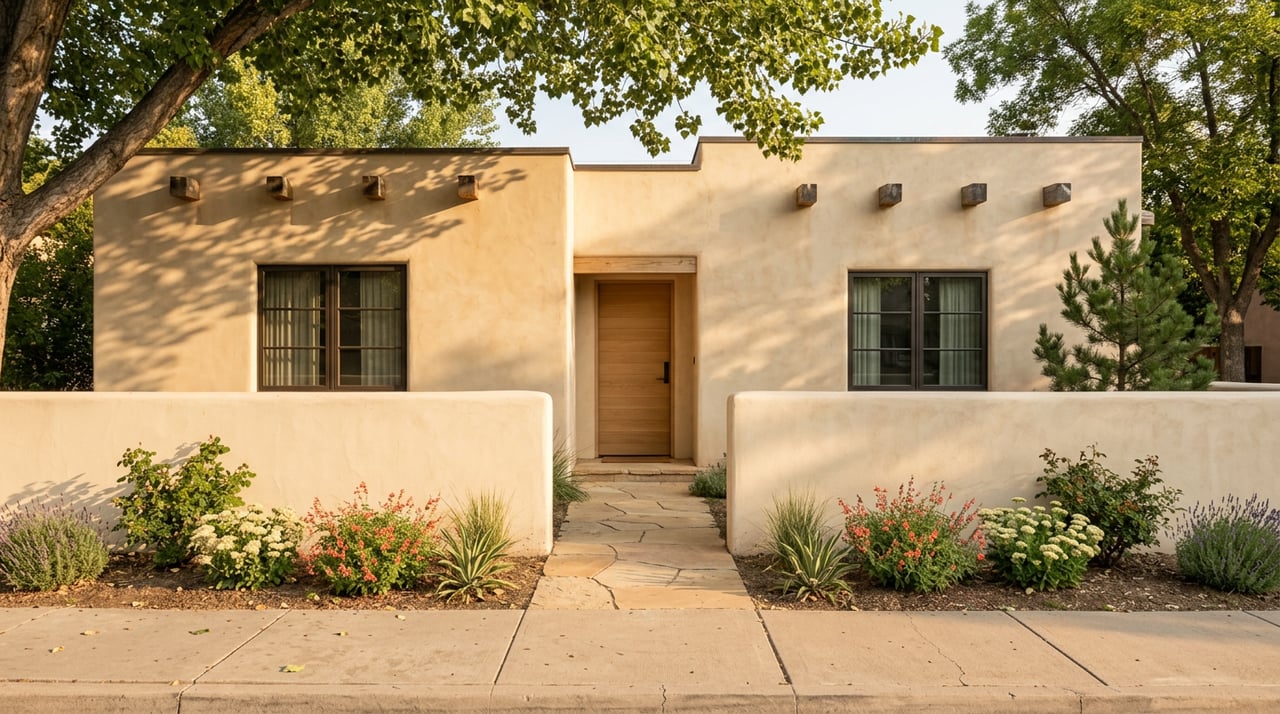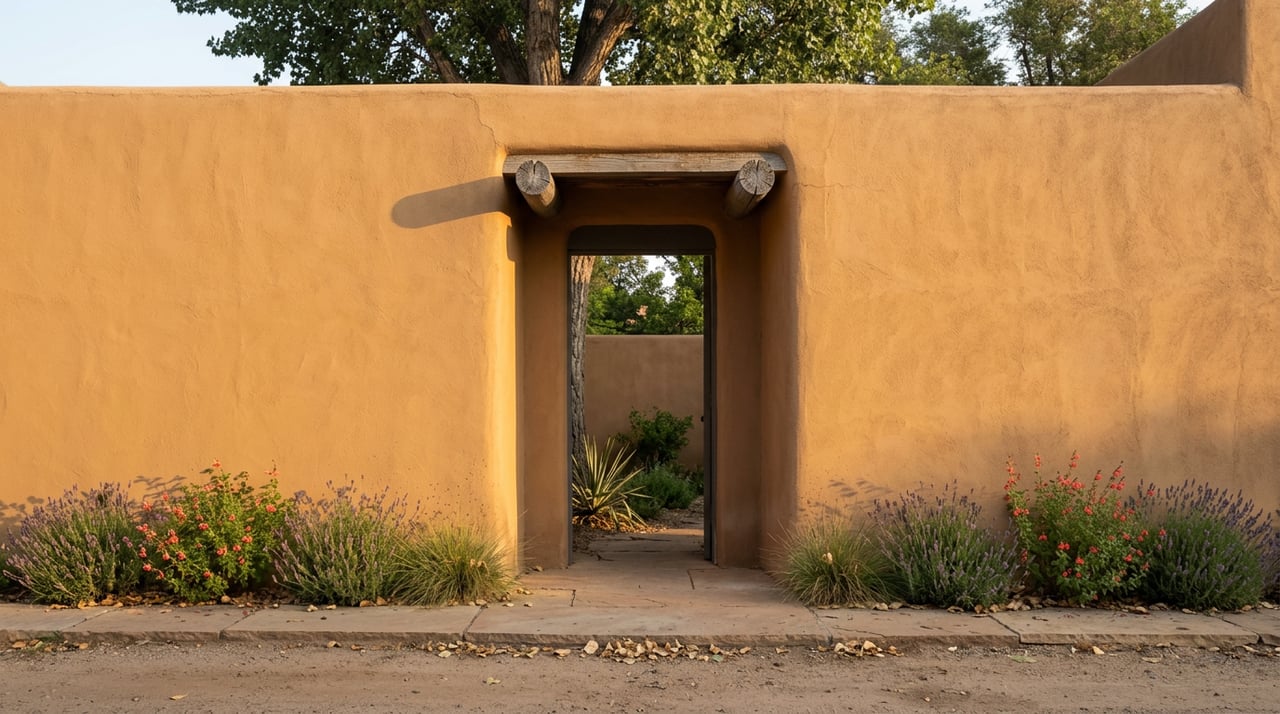
At eight in the morning, Gormley Lane is empty. The narrow calle that connects Acequia Madre to Canyon Road carries no gallery traffic yet, no idling cars looking for the one open parking spot, no docent-led tour groups pausing under a cottonwood to hear about Los Cinco Pintores. The five painters who settled this corridor in the 1920s and built their own adobe homes would probably recognize this hour better than any other. The doors that define Canyon Road today, more than a hundred of them, do not open until ten.
That gap between dawn and ten o'clock is not a footnote. It is the reason people who live along Acequia Madre talk about Canyon Road differently than the guidebooks do. The street runs on two schedules, and only one of them belongs to the neighborhood.
A Street Zoned For Neighbors, Not Nightclubs
Canyon Road looks like a commercial strip, but its zoning has never fully agreed. The city classifies it as a residential and arts and crafts district, a designation that came to a head in 1996 when the Santa Fe Board of Adjustment ruled that El Farol, the tapas bar and music venue near the top of the road, had been operating illegally as a nightclub since the early 1960s. The bar argued it had offered live entertainment since at least 1971. Neighbors organized under a name that leaves nothing to interpretation: the No Nightclubs on Canyon Road Committee. The city attorney at the time cited complaints about patrons revving engines and leaving bottles on the sidewalk, noise that residents said was more than a quiet residential street could absorb.
That fight from three decades ago is not ancient history. It is the legal skeleton still underneath the street today, and it explains something the tourist-facing write-ups skip entirely: Canyon Road's charm was never an accident of preservation. It was defended, block by block, by people who lived there and wanted their evenings back.
"The wealthy in this city can only dine out so many times per week, right?"
That line ran in a Santa Fe Reporter piece written the week El Farol shut its doors, and it captures something the zoning fight never fully resolved. Even a residential arts district has to pay its own rent.
What El Farol's Closing Actually Tells You
El Farol closed this spring. The building at 808 Canyon Road dates to 1835 and operated for generations as La Cantina del Cañon under the Vigil family before Vint Blackburn and Bob Young launched it as El Farol in 1963, buying the property outright in 1968. It survived an arson attack in 1998 that shut it down for two months. It did not survive 2026.
The stated reasons, according to managing member Freda Keller in a statement to the Santa Fe New Mexican, were straightforward: the investors who owned the building wanted to sell the property, and the broader economic downturn made continuing to operate untenable. That is worth sitting with, because it is a different story than the one usually told about restaurant closures. This was not a business that lost its following. It was a building pushing 200 years old whose real estate value to its owners had outgrown the economics of running a bar inside it.
For a corridor that spent 1996 fighting to stay residential, that is the more relevant lesson than any menu retrospective. When the ground floor of an arts district becomes valuable enough on its own, the businesses renting it become optional, no matter how long they have been there or how loudly locals loved them.
Two Schedules, One Street
The practical result is a street that functions on two different clocks, and knowing which one you are standing in changes what the walk feels like entirely.
| Time | Whose hour it is |
|---|---|
| Before 10:00 a.m. | Residents, dog walkers, the acequia itself |
| 10:00 a.m. to 5:00 p.m. | Galleries, tour groups, day visitors |
| First Wednesday, June through September, plus Halloween | The neighborhood, by design |
| December 24th | Everyone, on foot, by farolito light |
That middle row is the one most visitor guides never mention, because until 2024 it did not exist.
The Walk Locals Built For Themselves
Maggie Fine grew up on Canyon Road attending the Christmas Eve Farolito Walk, the one night the city closes the street to cars and lines it with thousands of paper lanterns. As an adult living there with her husband and daughter, she found herself wanting more chances like it, evenings that belonged to the people who actually lived on the block rather than to the gallery calendar. So in the summer of 2024 she launched the Canyon Road Summer Walk, a monthly evening event held the first Wednesday of the month from June through September, with a special edition on Halloween.
The series has already produced its own local mythology. One installment brought together musician Jono Manson and filmmaker Godfrey Reggio for a cabaret-style tribute at the Neptune Event Space, honoring Claude's Bar, a rowdy neighborhood watering hole that closed long before most current residents arrived. Fine described the Farolito Walk of her childhood this way in New Mexico Magazine: "From a kid's perspective, it was magic." The Summer Walk reads like an attempt to manufacture a few more nights with that same quality, deliberately, on a schedule the tourist economy does not touch.
Three summers in, it has become something closer to infrastructure than novelty: a recurring answer to the same problem the 1996 zoning fight tried to solve, which is how a street this commercially valuable holds onto anything that belongs to its neighbors.
Where The Second Clock Runs
The businesses that serve both schedules at once are the ones worth knowing by name, because they are what makes the early mornings and the first Wednesdays livable rather than just quiet.
- The Compound, at 653 Canyon Road, still centers on the sunken bar inside the restaurant Alexander Girard designed in 1966. In 2026 the kitchen brought on Michelin-trained Executive Chef Dale Kester, a change worth noting for anyone who treats the bar as a regular stop rather than a special occasion.
- Ahmyo Wine Garden, at 652 Canyon Road, keeps its patio open for the kind of unhurried evening that has nothing to do with gallery hours.
- Kakawa Chocolate House runs on its own clock entirely, pouring drinking chocolate to anyone who wants a reason to be on the street outside the ten-to-five window.
- Santa Fe Teahouse & Bistro, near the top of the road at 821 Canyon Road, holds a weekend jazz brunch that draws as many neighbors as visitors.
None of these depend on the tour bus schedule to make sense. That is precisely the point.
Past Gormley Lane
Walk the other direction from Canyon Road, back down Gormley Lane toward Acequia Madre, and the street named for Frank Gormley's 1903 general store still carries the warehouses he built, unconverted, into the present. It is the kind of quiet infrastructure that never shows up in a gallery review.
A few blocks over, El Zaguán, the 19th-century adobe hacienda now home to the Historic Santa Fe Foundation, keeps its original gardens open for anyone who wants a slower version of the neighborhood's history than a plaque can offer. Patrick Smith Park, named for the longtime pastor of the adjacent Cristo Rey Church, gives the corridor its access to the Santa Fe River and its only real green lawn. Project Tibet, tucked into the same stretch, keeps its gardens and store open as a genuinely different kind of cultural anchor than the gallery scene up the hill.
None of these places show up on the postcard version of Canyon Road. They are what the second clock actually looks like when you are standing in it: not a workaround, not a compromise, but the version of the neighborhood that was here before the doors opened at ten and will still be here after they close.
That is the real case for Acequia Madre. The proximity to more than a hundred galleries matters less than the five-minute walk to the hours when the street stops performing for anyone and simply belongs to the people who live along it.
If you are thinking about what it actually feels like to live inside that rhythm, not visit it, Plaza Group Santa Fe can walk you through what's available along Acequia Madre and the streets that feed into it. Schedule a Private Consultation with Beth Caldarello to start the conversation.