Stand at the bell tower in Aldea's central plaza on a Saturday morning and the neighborhood feels tight. Homes sit close along narrow streets, porches almost touching, the live and work units ringing the plaza like a small town square. Walk five minutes in almost any direction and that tightness disappears. The streets end, the piñon and juniper take over, and the only sound is gravel under your shoes. Most residents notice this shift without ever asking why it happens so fast. The answer is not an accident of terrain. It is math the developer did on purpose before a single foundation was poured.
Aldea de Santa Fe sits on 345 acres on the northwest edge of the city, technically outside Santa Fe's municipal limits and under county jurisdiction instead. The community's own materials put 205 of those 345 acres into permanent open space, which means well over half the property was never meant to hold a house. The other acreage carries all 479 residential lots: single-family homes, townhomes, patio homes, and a handful of commercial live and work condos clustered around the plaza. That ratio is the whole design logic in one number. Instead of spreading homes evenly across the parcel the way most subdivisions do, the plan concentrated them tightly around a walkable center and pushed the open land to the perimeter, where it stays undeveloped by design rather than by leftover space.
The Plaza Was Built To Be Used, Not Looked At
The architect behind that decision is Andrés Duany, working through DPZ CoDesign, and the plaza itself reflects the same New Urbanist thinking that shaped the acreage split. The bell tower and the surrounding commercial units are not decorative. They are meant to function as the actual center of daily movement, the same way a plaza works in the small Spanish Colonial villages the plan was modeled on. The Community Center building nearby carries out the practical side of that idea. It hosts the homeowners association's activities and a rotating schedule of fitness classes, so the plaza does double duty as both a visual anchor and a functional stop on the route between home and trailhead.
Around that center, the amenity list reads less like a subdivision brochure and more like a small town's recreation department:
- Tennis and pickleball courts
- A basketball court
- Playgrounds and neighborhood parks
- A bocce court
- A labyrinth
- The Community Center building for HOA programming and fitness classes
None of these sit off to one side as an afterthought. They cluster around the plaza with the homes, which is exactly the point. The density up front is what pays for the openness out back.
Where The Trails Actually Go
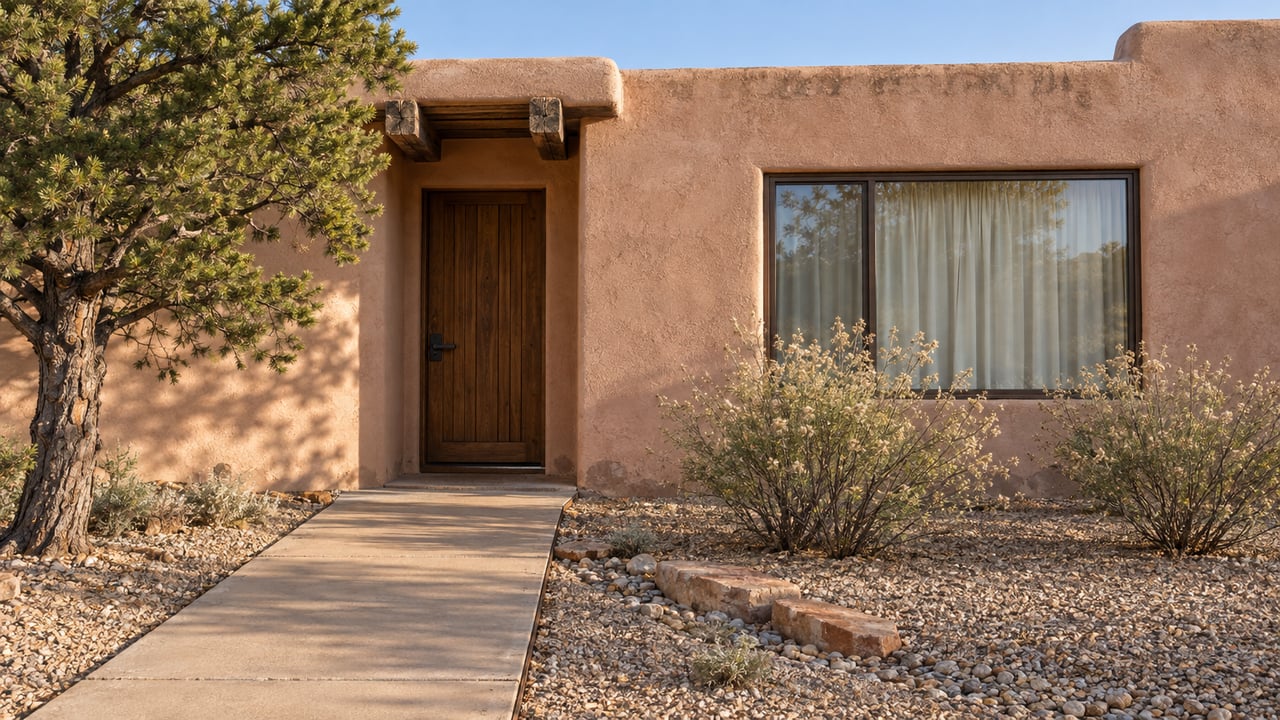
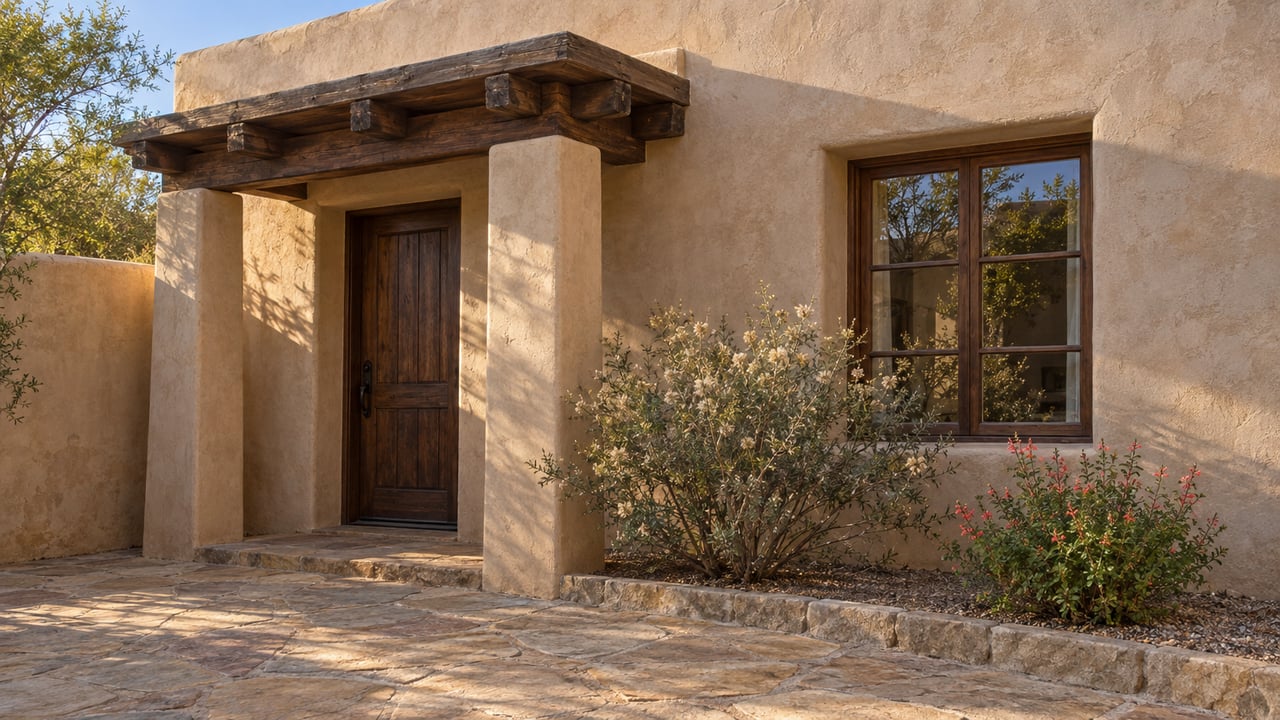
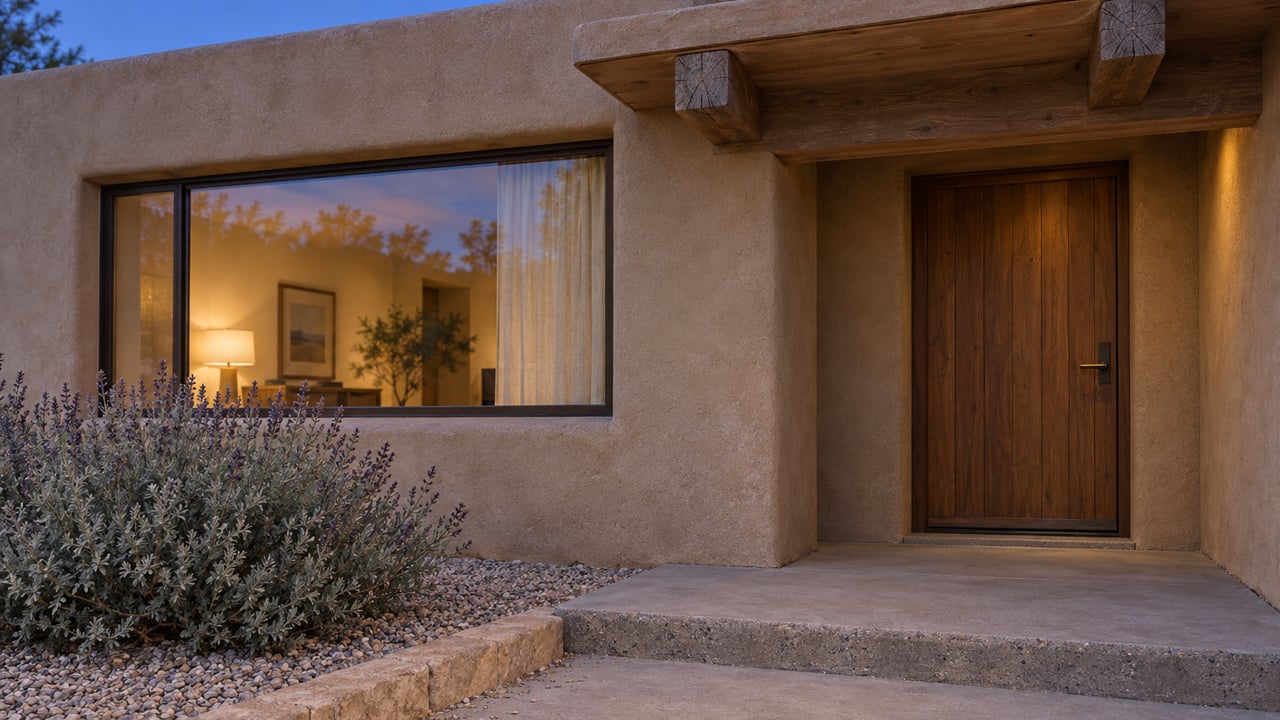
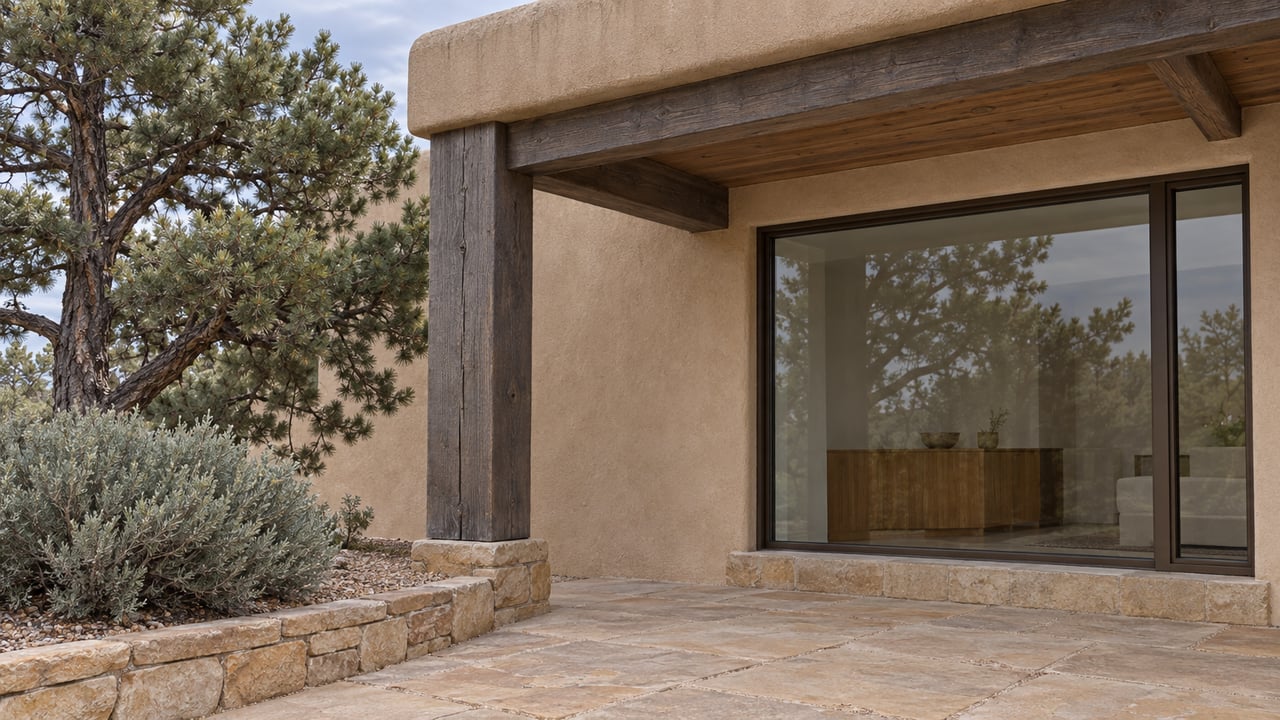
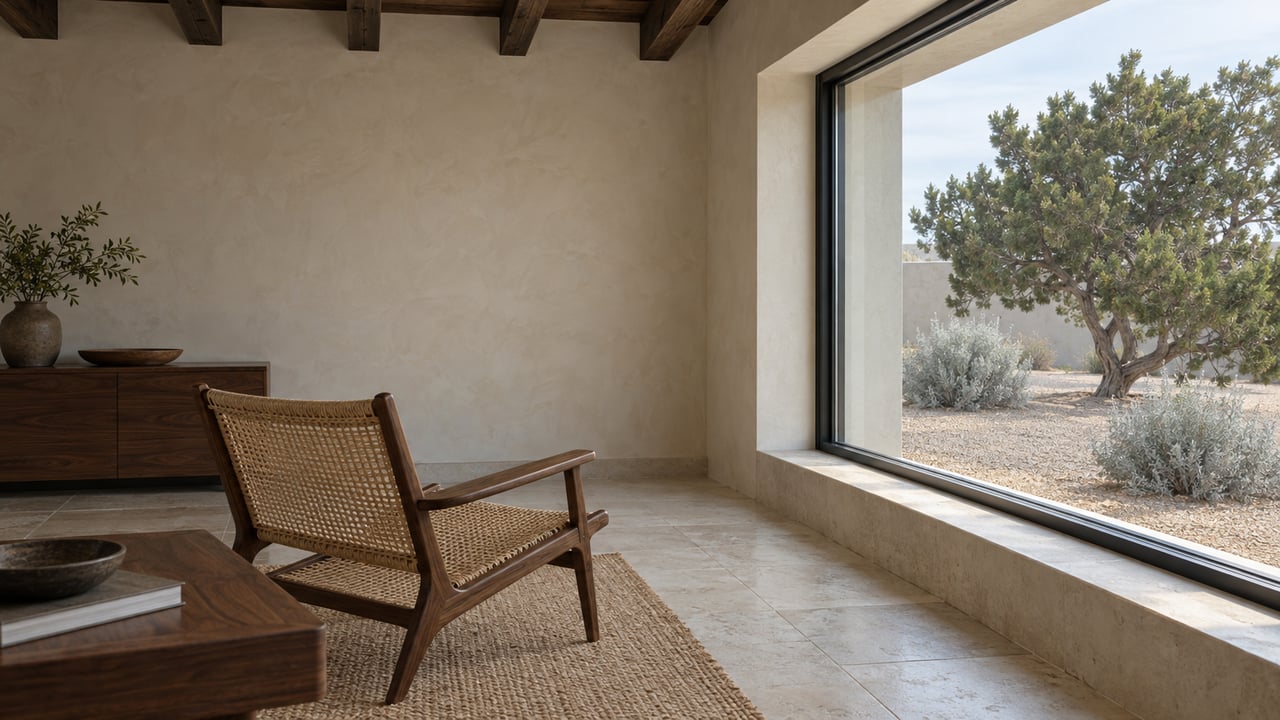
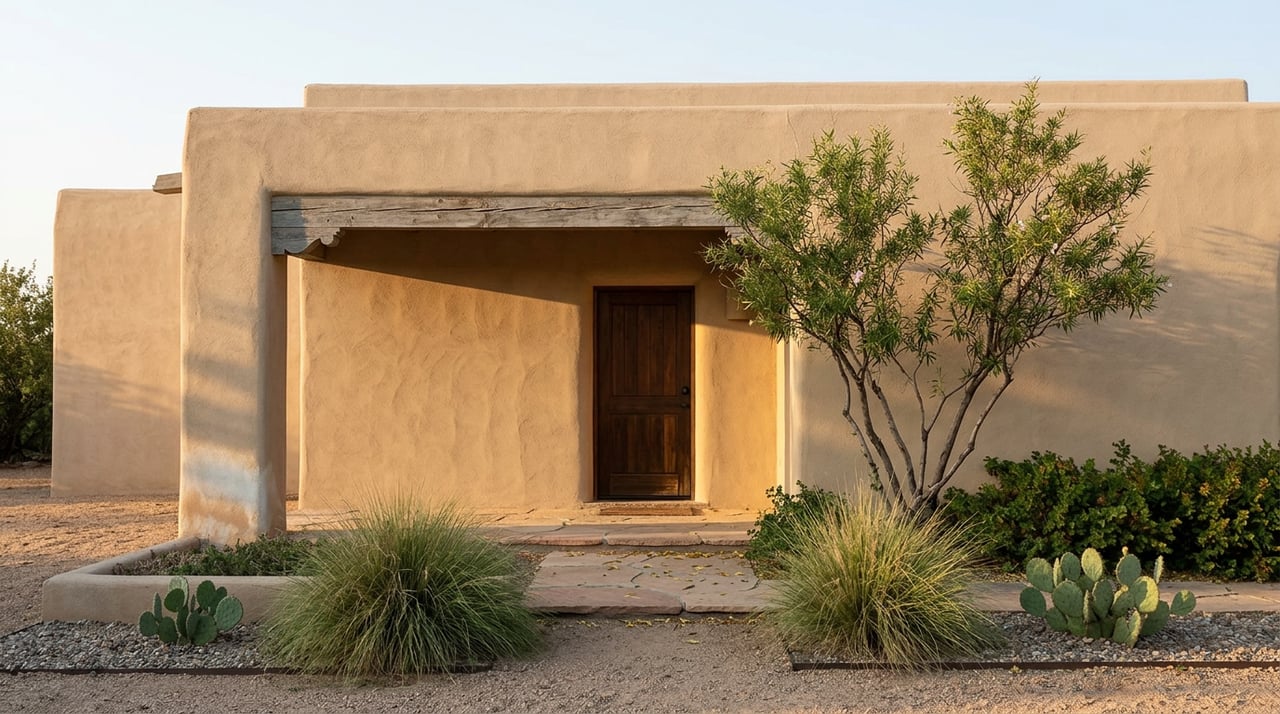
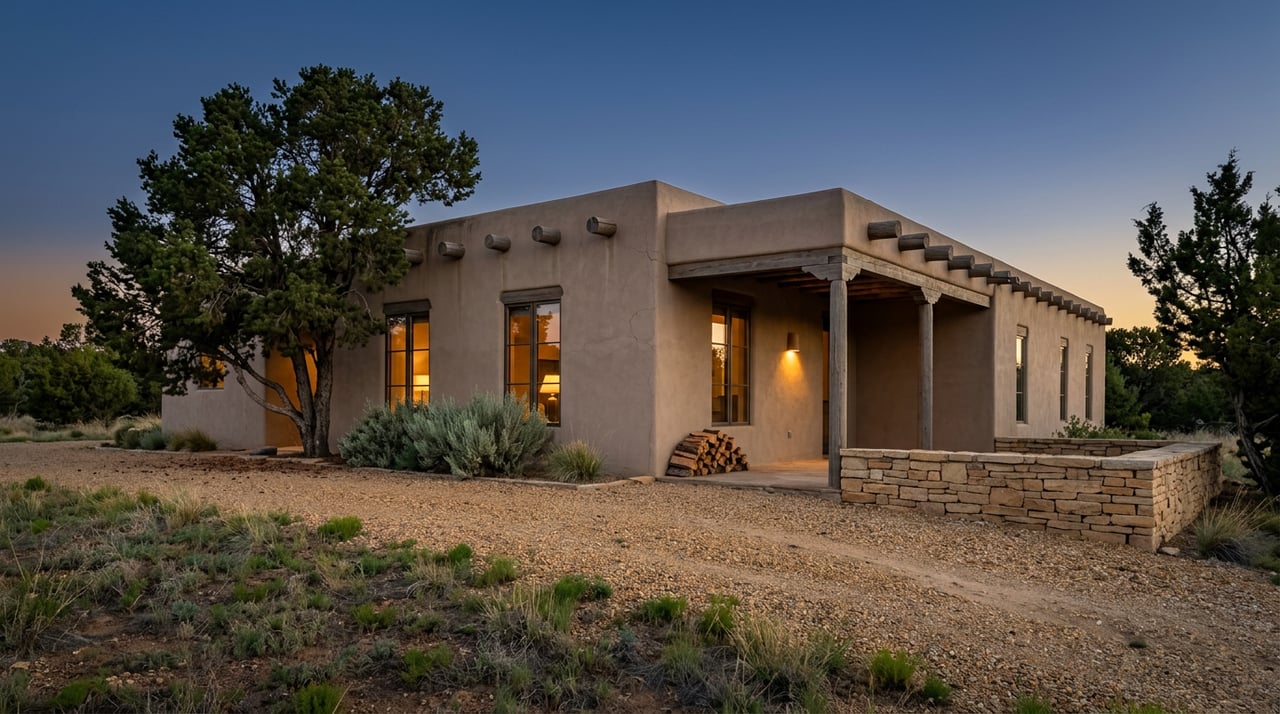
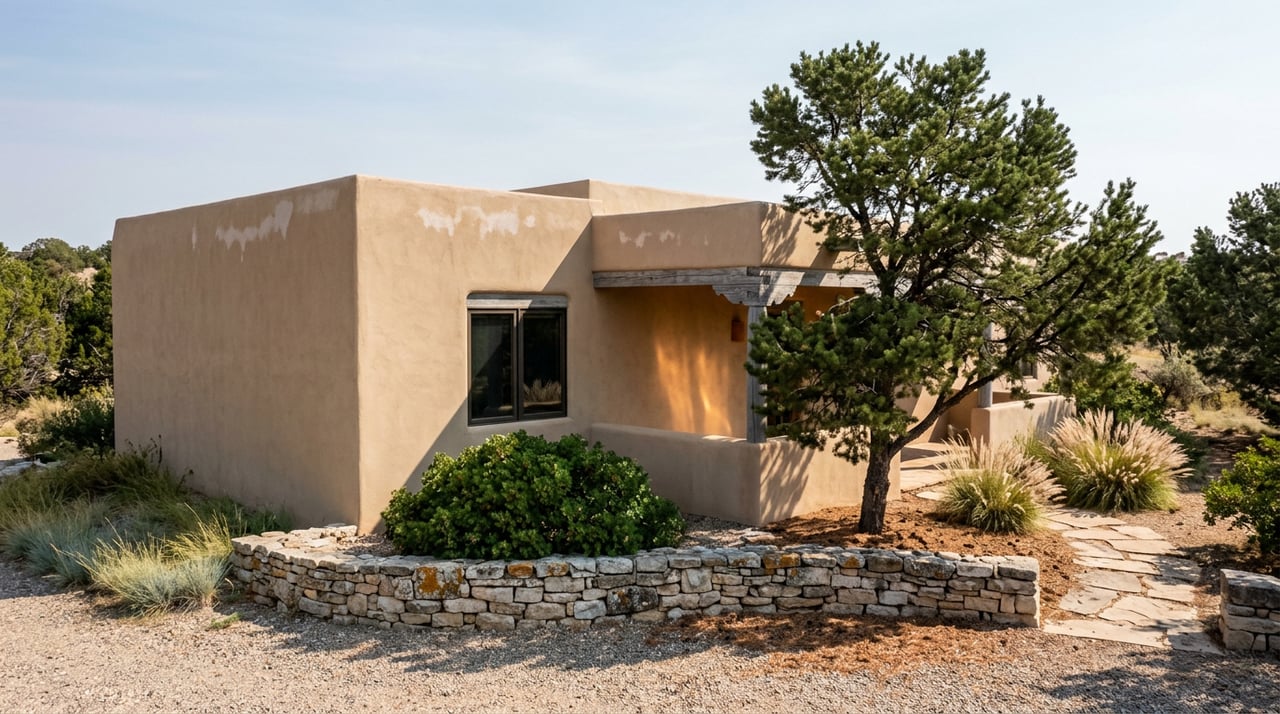
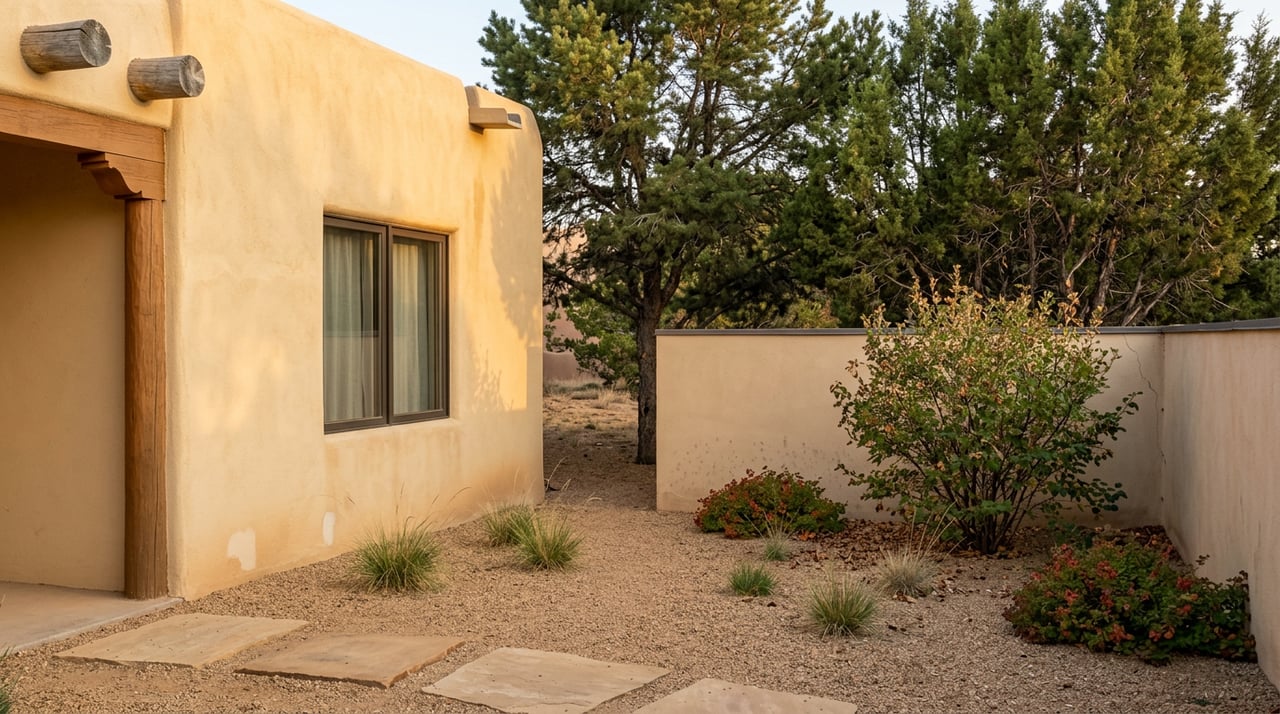
The 205 acres of open space is not a single preserve you visit on purpose. It is a network of sidewalks and trails designed to connect the neighborhood internally while also linking out to the surrounding trail system beyond Aldea's edge. That distinction matters for how the neighborhood actually gets used day to day. A resident does not have to drive anywhere to hike. The trail starts at the edge of the plaza and keeps going, past the last row of patio homes, into open ground where the only structures left are the ones Aldea's own architectural guidelines put there: flat and gently sloped rooflines, earth-toned stucco, wood accents drawn from the same building traditions found across the rest of Santa Fe.
This is also where the county jurisdiction detail becomes more than trivia. Because Aldea sits outside city limits, the open space around it operates under county oversight rather than municipal parks management, and the homeowners association itself takes on a more active role in maintaining and connecting those trails than a typical city-managed greenbelt would. Aldea's HOA runs day to day operations through a full-time, on-site management team, which is a level of hands-on upkeep you would not expect from a neighborhood association overseeing 479 lots. That structure is part of why the trail network stays legible and walkable rather than fading into unmarked scrub at the property line.
The Numbers Line Up With What Neighbors Actually Say
None of this would matter much if it were only a planning document. What makes the design choice worth noticing is that residents describe the neighborhood in terms that match the acreage split almost exactly. On Nextdoor, Aldea residents rank walking, gardening and landscape, dogs, and hiking and trails among their top shared interests, alongside home improvement, cooking, and local issues. When asked what makes Aldea a good place to live, the same neighbors point to architecture, walkability, quiet, and being well maintained, dog friendly, and peaceful. Those are not generic compliments. They are a fairly direct description of what a 60 percent open space ratio and a walkable plaza core actually produce in practice: short walks to real trails, quiet interior streets, and a level of upkeep that comes from active management rather than benign neglect.
It also explains a texture of daily life that is easy to miss from the outside. A neighborhood built the conventional way, with houses spread across the entire parcel, tends to blur the line between yard and open space. You are never quite sure where your property ends and the wild edge begins, and the land between houses often feels more like buffer than destination. Aldea's split does the opposite. The boundary between built and open is sharp on purpose. You know when you have left the village core, because the architecture stops and the piñon starts, cleanly, within a few minutes of leaving your front door.
A Village Built Around A Choice, Not A Compromise
The easy narrative about a master-planned community with a bell tower and a labyrinth is that it traded space for amenities, more house for more park. Aldea's numbers tell a more specific story. The community did not shrink lots to squeeze in a few extra features. It concentrated 479 homes onto a deliberately compact footprint so that 205 acres, more than half the total parcel, could remain permanently open and directly walkable rather than parceled into private yards. That is a different kind of trade, and it is the one residents are actually living with every time a five minute walk from the plaza turns into open high desert instead of somebody else's back fence.
Whether you have lived in Aldea for six months or sixteen years, that arithmetic is worth knowing the next time you find yourself crossing the plaza on your way to a hiking loop that starts closer to your front door than the mailbox at the entrance of most neighborhoods twice Aldea's size. It is not a coincidence that the streets feel close and the trails feel far. It is the plan working the way it was drawn.
If a shift is on your horizon, whether that means more space, less upkeep, or simply a different corner of Santa Fe to call home, Plaza Group Santa Fe knows this village and the county-side details that come with it as well as anyone in the market. Schedule a private consultation when the time feels right, and bring your questions about Aldea's plaza, its trails, or anywhere else in Northern New Mexico that has caught your eye.