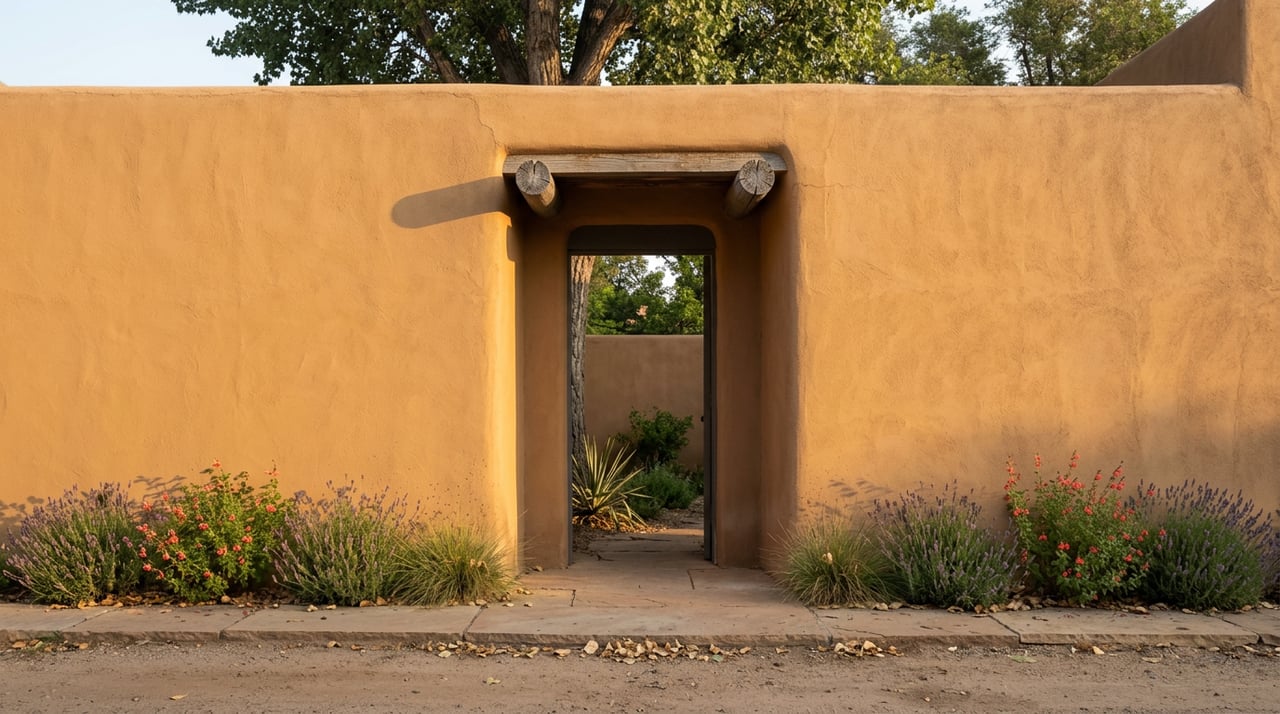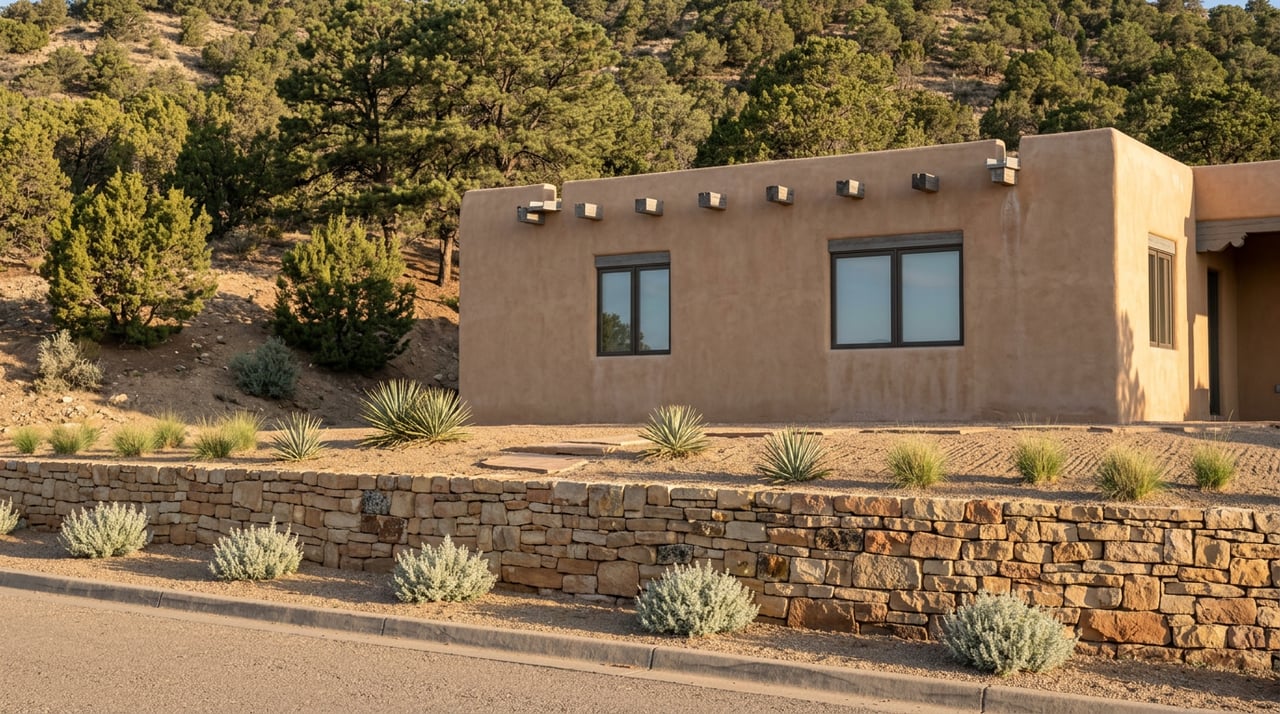
On June 4, Santa Fe County cut a ribbon at the Rancho Viejo Fire Station Trailhead for 2.8 new miles of concrete trail, complete with a 90-foot pedestrian bridge over the Arroyo Hondo. A few miles away, on the older loop that shares its name, the biggest recent addition was four wooden benches, built in part by a local Eagle Scout.
Both projects call themselves the Arroyo Hondo trail. Neither one is finished pretending to be the other.
Two Trails Share A Name And Nothing Else
If you have lived in Arroyo Hondo or Seton Village for more than a few years, you already know the dirt loop off Old Agua Fria Road: 86 acres of piñon and juniper, a seasonal stream, a historic irrigation dam, views of the Galisteo Basin. It was purchased in 2002 after a private landowner nearly subdivided it, and it has spent the two decades since being the kind of place you walk a dog before the sun gets high.
What opened this June is a different animal entirely. The Arroyo Hondo Trail, in the county's usage, is a six-mile concrete corridor built to move people between destinations: the Rail Runner station off NM-599, Santa Fe Community College, the I-25 and Cerrillos Road interchange. It was designated a District Trail in the Community College District Plan and shows up in the county's 2019 Open Space, Trails and Parks Strategic Management Plan. It is infrastructure in the literal sense, engineered to carry commuters and cyclists between fixed points, not a place built for lingering.
Same watershed. Same rough geography. Completely different reason to exist.
What The New Concrete Actually Connects
The June ribbon cutting covered Segments 2 and 3, two of the five planned pieces of the trail. Segment 2 runs west from the Rancho Viejo Fire Station Trailhead toward the Turquoise Trail Sports Park along NM-14, and it is the segment carrying that 90-foot bridge across the arroyo itself. Segment 3 heads the other direction, northeast from the fire station toward Richards Avenue, with spurs reaching the Avenida del Sur and Velocity Road roundabouts.
Two segments remain on the county's list:
- Segment 1, which will extend the trail from the Turquoise Trail Subdivision to the Rail Runner station at NM-599
- Segment 5, planned adjacent to Richards Avenue
The project came in just under $5 million, funded through Tribal/Local Public Agency resources administered by the New Mexico Department of Transportation, with the county covering roughly 15 percent of the cost and federal grants reimbursing the rest. Meridian Contracting built it, Bohannan Huston handled construction oversight, and OTAK designed the network end to end. That is a lot of engineering and public money for something whose real payoff is simple: a resident near the fire station trailhead can now walk or ride toward the sports park, toward Richards Avenue, and eventually toward the community college and the train, without touching a car.
Santa Fe County's Open Space, Trails, and Parks program now oversees roughly 70 miles of trail and 9,400 acres of open space countywide. This one corridor is a small fraction of that total, but it is the fraction that happens to run through this neighborhood's backyard.
The Old Loop Was Never Built To Go Anywhere
The original Arroyo Hondo Open Space got its own round of attention in 2025, on a scale that makes the concrete project look almost industrial by comparison. Four interpretive exhibits and four benches went in that spring, including a new welcome kiosk at the trailhead off Arroyo Hondo Road. The kiosk's frame was built by Arroyo Hondo woodworker Jeff Smith. The exhibits explain the landscape features, the local geology, the area's cactus species, and the history of the Arroyo Hondo Irrigation Project, the same historic dam visible from several points on the loop.
The benches came from a more personal place. They were funded by Eagle Scout Eddie Blick, with matching money from the Arroyo Hondo Land Trust, and installed with help from Santa Fe Troop 57 and the county's trail maintenance crew. Blick put it simply when the work was finished:
"I have loved hiking the Arroyo Hondo Open Space trails since before I can remember and was excited for the chance to give back to the community."
That is the difference in one sentence. The new trail was funded by a state transportation agency to solve a mobility problem. The old loop was upgraded by a teenager who grew up walking it and wanted to leave something behind on it. Both are legitimate ways to build a trail. They are not the same project wearing two names, and treating them as interchangeable misses what each one is actually for.
Walking Both In One Weekend
If you want to see the contrast for yourself rather than take it on faith, here is a route that touches both trails and the two neighborhood institutions that bookend them:
- Start at the Rancho Viejo Fire Station Trailhead on Rancho Viejo Boulevard, where the new Segment 2 and 3 concrete begins.
- Walk or ride Segment 2 west toward the Turquoise Trail Sports Park, crossing the new 90-foot bridge over the arroyo along the way.
- Backtrack and pick up Segment 3 northeast toward Richards Avenue, noting the spur trails to the Avenida del Sur and Velocity Road roundabouts if you want to extend the loop.
- Drive or bike over to the original Arroyo Hondo Open Space trailhead off Old Agua Fria Road, park at the small lot, and walk the roughly two-mile loop past the historic dam and the new interpretive kiosk.
- Read the trailside exhibits on geology and the irrigation project, and take one of the new benches near the overlook of the Galisteo Basin if you want to sit with the view for a minute.
- Finish at Harry's Roadhouse on Old Las Vegas Highway, open for breakfast, lunch, and dinner most days, and now under the ownership of longtime staff members Kathleen O'Brien and Mario Reyes, who took over when the longtime owners retired in 2024.
If you would rather swim or hit a tennis ball than hike a second loop, El Gancho Fitness, Swim and Racquet Club sits on the same stretch of Old Las Vegas Highway, a few doors down from Harry's, with indoor and outdoor courts, a pool, and a spa.
The Neighborhood The Trails Are Actually Serving
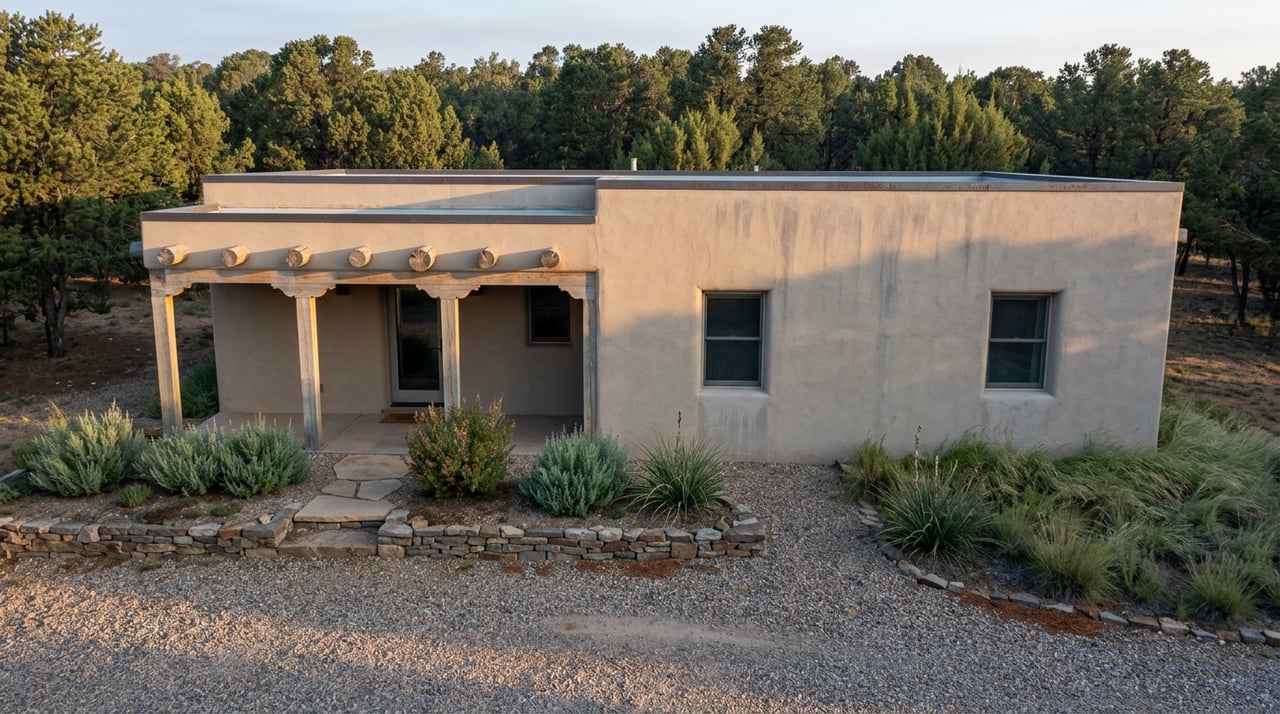
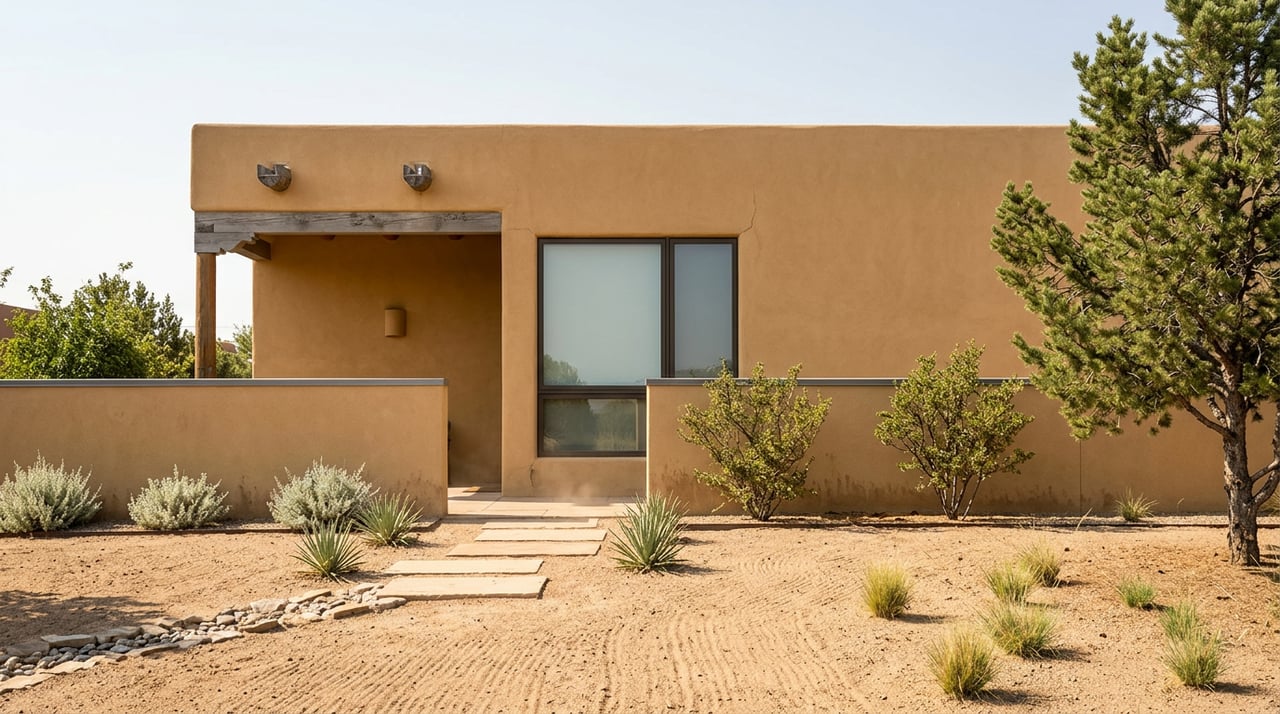
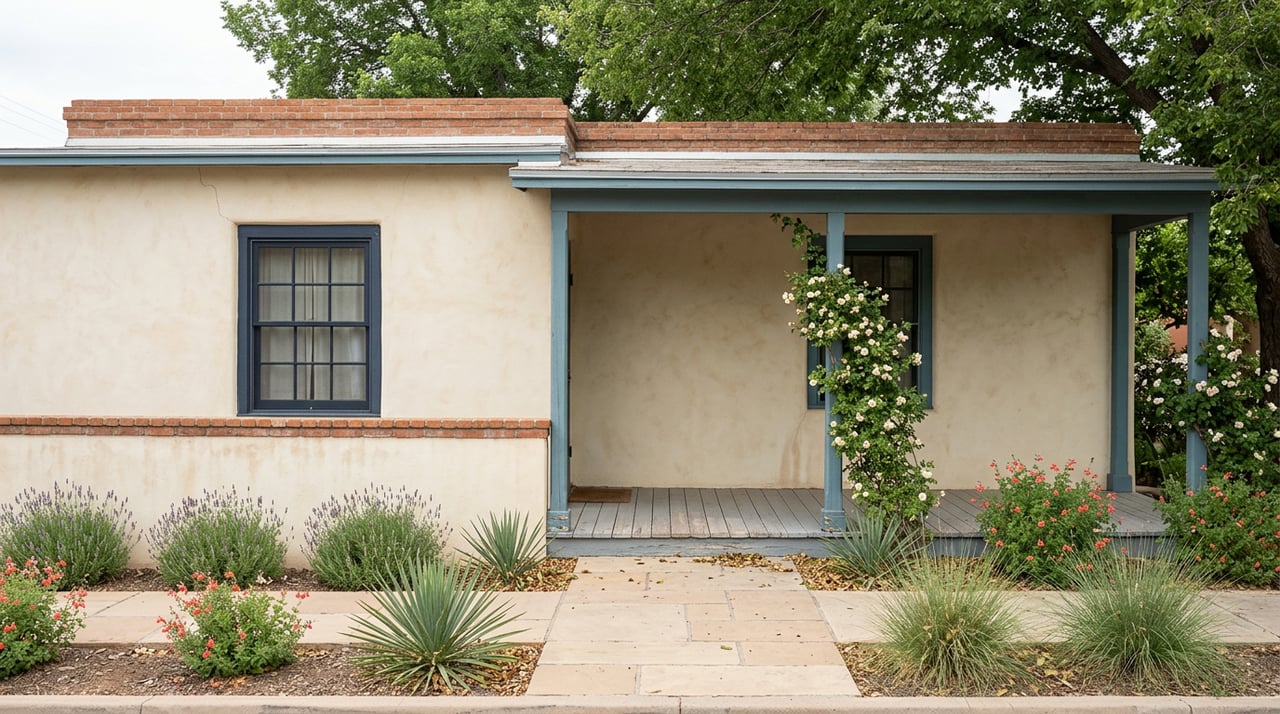
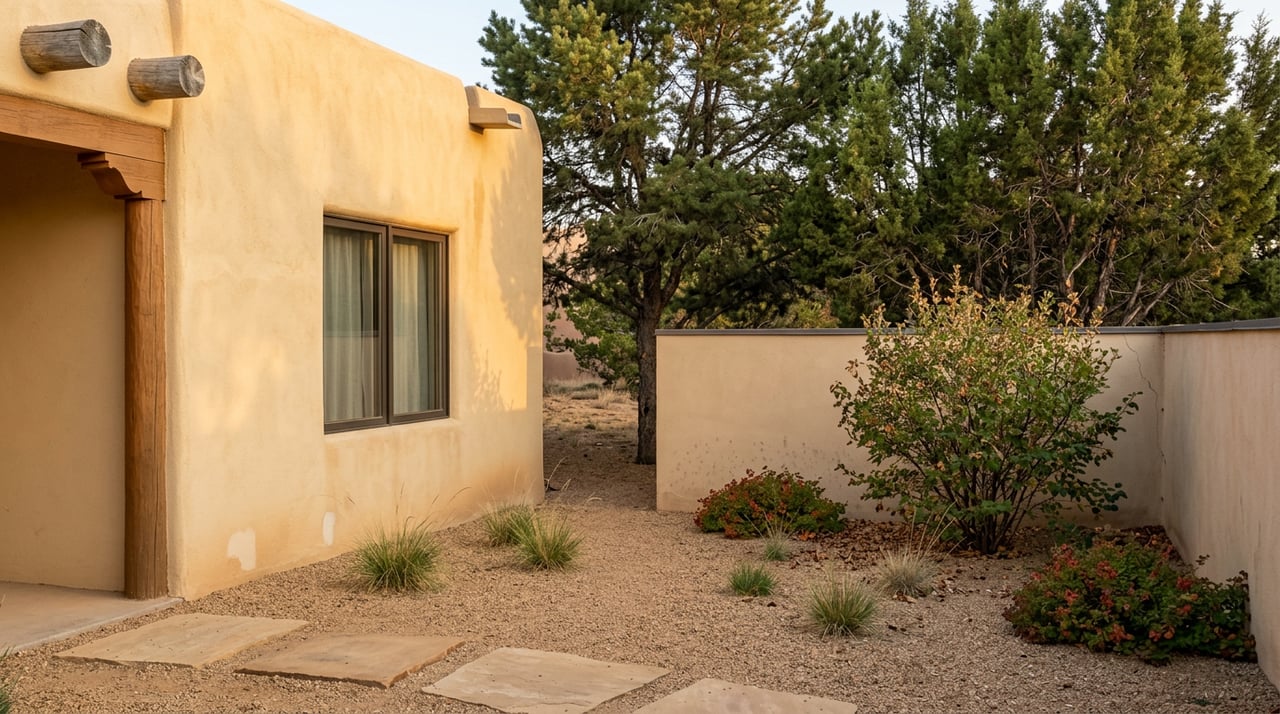
Arroyo Hondo and Seton Village have always been the part of town where privacy and large lots matter more than density, a place of historic, designer, and occasionally eccentric homes spread out along winding roads at the edge of the city. Seton Village itself carries that same tension in its bones. It is a National Historic Landmark District, founded in 1930 by Ernest Thompson Seton, a co-founder of the Boy Scouts of America, and the Academy for the Love of Learning now maintains the ruins of his 32-room castle as a contemplative garden on the same 86-acre campus.
That is the pattern worth noticing. This corner of Santa Fe keeps building two versions of everything: a quiet, deliberately unhurried version rooted in who already lives here, and a newer, more connected version built to link the neighborhood to the rest of the city. The Academy sits on ruins it chose to preserve rather than restore. The Open Space got benches from a teenager who grew up on the trail, not a contractor. And now the trail system itself has split the same way, with a state-funded concrete corridor running parallel to a dirt loop that has no ambition beyond being a good two miles.
Neither version is winning. They are running side by side, a few miles apart, and within about a year of each other both got noticeably better.
If you already call Arroyo Hondo or Seton Village home, you likely knew pieces of this story before today. What's worth sitting with is how rarely these two trail systems get talked about as two systems rather than one continuous idea. They are not. Knowing the difference changes how you use both of them.
If you are curious about what else is shifting in this pocket of Santa Fe, or you would like a closer look at how a property here fits into the neighborhood's mix of privacy and access, Beth Caldarello and Plaza Group Santa Fe would be glad to walk you through it. Schedule a private consultation whenever you are ready to talk specifics.